Jan. 31, 2026
The operational success of high-pressure fluid systems in 2026 relies as much on mechanical assembly protocols as it does on material quality. This technical guide, "Threaded Galvanized Fittings Installation: Sealing, Torque, Compatibility & Leak Prevention," serves as a definitive manual for the professional installation of malleable iron pipe fitting components within 2.5 MPa (363 PSI) environments.
Central to the discussion is the engineering of the 1:16 taper, a conical geometry that facilitates an interference fit capable of transforming rotational torque into a permanent hydraulic seal. The guide moves beyond basic plumbing to explore the sophisticated interaction between high-purity zinc coatings and modern sealing technologies, specifically the "Double-Seal" method involving high-density PTFE tape and non-hardening pipe dope. Furthermore, we address the critical risks of over-torque and "hub splitting," alongside the electrochemical dangers of galvanic corrosion when mixing gi pipe fitting inventory with dissimilar metals like copper. By synthesizing international standards from ASME, ISO, and NFPA, this guide provides installers with the "Zero-Leak" workflow necessary for fire suppression, industrial air, and municipal water infrastructure, ensuring that every joint remains structurally sound for a 50-year service lifecycle.
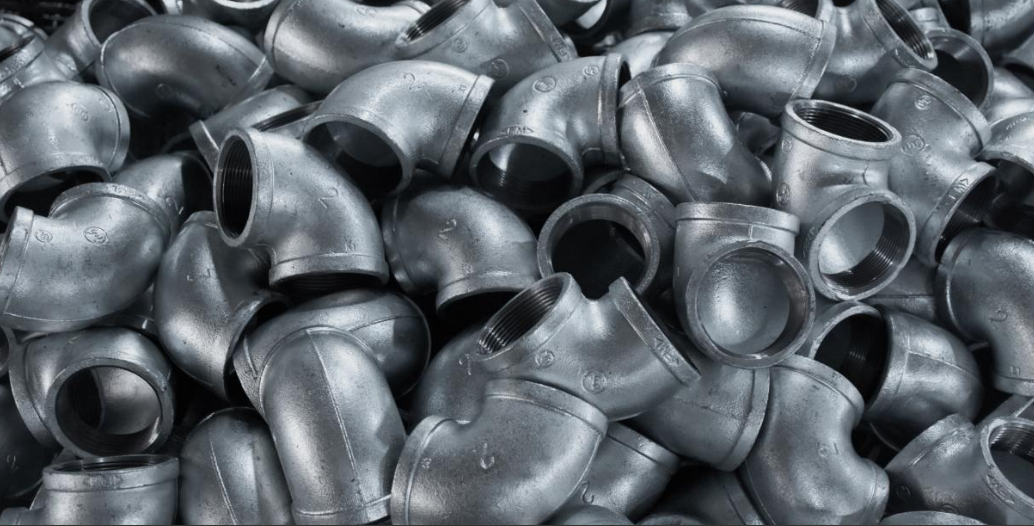
The Geometry of Integrity: Success begins with the 1:16 taper. This 1.7899° angle creates a mechanical wedge that provides the primary metal-to-metal seal. Every gi pipe fitting must be inspected for CNC precision to ensure this engagement is uniform.
The Double-Seal Best Practice: For 2.5 MPa reliability, the industry standard is now the simultaneous use of high-density PTFE tape (for lubrication and initial sealing) and non-hardening pipe dope (to fill the microscopic spiral leak paths).
Precision Torque Management: Over-tightening is a leading cause of failure. Installers must adhere to the Finger-Tight Plus (F.T.P.) method, typically adding 2 to 3 full wrench turns beyond hand-tight to avoid exceeding the hoop stress limits of the malleable iron hub.
Galvanic Isolation: To prevent the zinc coating from acting as a sacrificial anode, dielectric unions or brass buffers must be used whenever connecting galvanized fittings to copper or stainless steel systems.
Fire Safety Mandates: In fire fighting pipe fitting installations, the "Three-Thread" rule and "First-Thread-Clear" sealant application are mandatory to prevent internal blockages and ensure UL/FM compliance.
Staged Verification: A "Zero-Leak" system requires a two-stage test: a low-pressure pneumatic (air) soap test to catch microscopic thread gaps, followed by a high-pressure hydrostatic test at 1.5x working pressure (up to 3.75 MPa).
Material Ductility: The 10–12% elongation of Jianzhi malleable iron is what allows the fitting to absorb the stresses of the 1:16 wedge without fracturing—a property that budget "light-type" cast iron lacks.
1. The Geometry of a Seal: Understanding the 1:16 Taper
2. Choosing Your Sealant: PTFE Tape vs. Pipe Dope vs. Anaerobic Resins
3. The Torque Balance: Hand-Tight, Wrench-Tight, and Mechanical Limits
4. Material Compatibility & Galvanic Corrosion: Mixing Metals
5. Pressure Testing & Leak Detection for 2.5 MPa Systems
6. Installation Best Practices for Fire Fighting Pipe Fitting Systems
7. Troubleshooting Common Installation Failures
8. Conclusion & Technical References
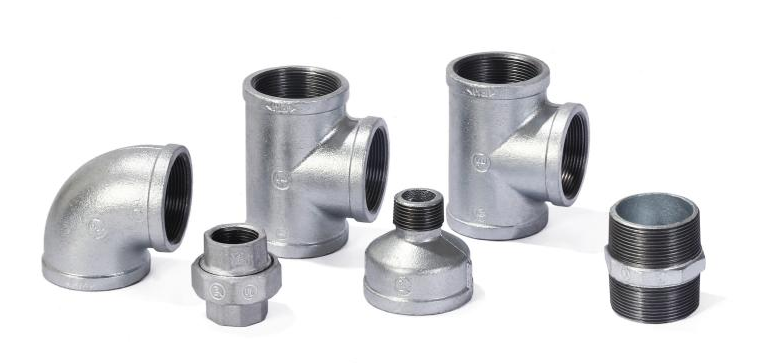
The integrity of a malleable iron pipe fitting connection doesn't just rely on the sealant you apply; it is fundamentally engineered into the metal itself. In 2026, as industrial systems frequently operate at the 2.5 MPa (363 PSI) limit, understanding the mechanical "wedge" of the 1:16 taper is the difference between a high-performance seal and a catastrophic failure.
Unlike the straight threads found on common bolts, which are designed primarily for fastening, pipe threads—specifically NPT (National Pipe Taper) and BSPT (British Standard Pipe Taper)—are designed to create a pressure-tight hydraulic seal. They achieve this through a specific conical geometry known as a 1:16 taper.
The designation "1:16" defines the slope of the thread profile relative to the centerline of the pipe. Specifically, for every 16 units of axial length, the diameter of the thread increases (or decreases) by exactly 1 unit.
In engineering terms, the taper is measured on the diameter. This results in a half-angle (theta) for the taper calculated as:
theta = arctan(1/32) = 1.7899 degrees (approximately 1° 47' 24")
While NPT uses a 60° thread flank angle and BSPT uses a 55° Whitworth angle, both share this identical 1:16 taper. This geometry creates a "conical wedge" that converts rotational torque into massive radial compression, which is vital for any fire fighting pipe fitting installation where vibration is common.
As you thread a male gi pipe fitting into a female port, the diameters of the matching threads begin to interfere. This is known as an interference fit.
Initially, the fitting can be turned by hand (Hand-Tight Engagement). However, as the taper deepens, the flanks of the male and female threads are forced into one another. Because a malleable iron pipe fitting is ductile, the metal undergoes "elastic deformation." The threads actually compress and spring against each other, creating a high-pressure contact zone that blocks the passage of fluids.
The success of this wedge effect depends entirely on the material's ability to withstand "hoop stress" without cracking. This is where the chemistry of malleable iron becomes critical.
Brittle Iron: Standard gray cast iron would shatter under the radial force generated by a 1:16 taper.
Malleable Iron: The annealing process (which gives Jianzhi fittings their 10–12% elongation) allows the hub of the fitting to expand slightly and the threads to deform just enough to fill gaps.
This ductility is what allows the joint to achieve a metal-to-metal seal capable of holding 2.5 MPa.
Even with perfect 1:16 geometry, a "dry" seal is theoretically possible but practically difficult. In standard NPT threads, there is a tiny clearance between the crest (top) and root (bottom) of the threads. This creates a continuous spiral leak path.
The goal of professional installation is to use the 1:16 taper to crush the threads as close as possible, then use sealant to "clog" this microscopic spiral. Without the mechanical wedge of the taper, the sealant would simply be pushed out by the 2.5 MPa pressure.
The 1:16 taper is a precision instrument. If the threads are poorly machined or damaged, the "wedge" will be uneven, leading to localized stress points. A Jianzhi galvanized pipe fitting ensures that this taper is CNC-accurate, providing the consistent engagement depth needed for a predictable, leak-free seal.
In the high-pressure world of 2.5 MPa fluid systems, the sealant is not just a filler—it is a critical lubricant and a microscopic barrier. For a malleable iron pipe fitting, the choice of sealant can determine whether the 1:16 taper achieves its theoretical seal or fails during a pressure spike. In 2026, the industrial best practice has moved away from "either/or" thinking toward a combined approach that maximizes both mechanical and chemical integrity.
Commonly known as "Teflon tape," PTFE (Polytetrafluoroethylene) tape is the most ubiquitous sealer for a gi pipe fitting. However, its primary role is often misunderstood: it is first a lubricant and second a sealer.
By reducing the friction between the male and female threads, PTFE tape allows the installer to reach the necessary engagement depth of the 1:16 taper without the threads "galling" or seizing prematurely.
The 2026 Standard: For high-pressure systems, use High-Density (Pink or Grey) PTFE tape. Standard white plumbing tape is often too thin, requiring excessive wraps that can bunch up and cause uneven loading on the malleable iron pipe fitting hub.
Application Rule: Always wrap in the direction of the thread (clockwise when looking at the pipe end). A minimum of 3 to 5 wraps is standard, ensuring the tape is pulled taut into the roots of the threads.
Pipe dope (thread sealing compound) is a paste-like substance that fills the microscopic "spiral leak path" more effectively than tape alone. Unlike tape, which can sometimes be shredded by the sharp edges of a galvanized pipe fitting, dope remains a viscous fluid or semi-solid that conforms to every surface imperfection.
For a fire fighting pipe fitting, it is essential to use a non-hardening dope. Hardening compounds can become brittle over time; the constant vibration of high-velocity water pumps can cause brittle sealants to crack, leading to "weeping" leaks.
For 2.5 MPa (363 PSI) reliability, professional installers at Jianzhi recommend the Double-Seal Method:
1. Apply 3 wraps of high-density PTFE tape.
2. Apply a thin, even coat of pipe dope over the tape.
This combination uses the tape to provide the lubricity needed for deep taper engagement, while the dope acts as a secondary gasket to plug any voids. This is the gold standard for avoiding call-backs in industrial installations.
In environments with extreme vibration or thermal cycling, anaerobic thread sealants (like specialized Loctite grades) are the modern choice. These resins remain liquid as long as they are exposed to oxygen but cure into a hard, solvent-resistant plastic when confined between the metal threads of a malleable iron pipe fitting.
Warning: When using anaerobic resins on a gi pipe fitting, ensure the product is rated for galvanized surfaces. Some resins require an activator to cure properly on the non-reactive zinc coating.
Never use oil-based pipe dope on oxygen lines or specialized chemical transport systems. Similarly, ensure that the sealant chosen does not contain chemicals that can degrade the zinc coating of your galvanized pipe fitting. Always verify the Material Safety Data Sheet (MSDS) against your system's fluid requirements.
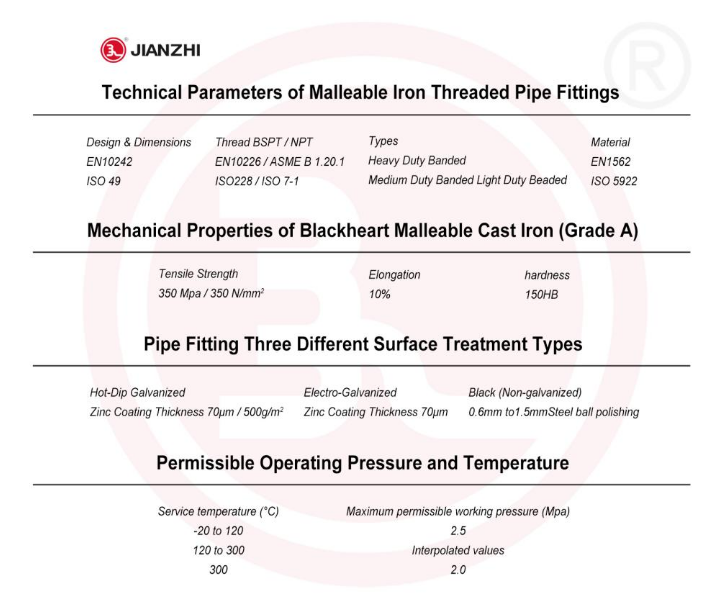
In the assembly of a malleable iron pipe fitting, torque is the engine that drives the 1:16 taper to its destination. However, more is not always better. In the pursuit of a 2.5 MPa seal, the most common cause of failure is over-tightening, which can lead to "hub splitting" or the permanent deformation of the threads. Section 3 outlines the delicate balance between achieving a leak-free joint and preserving the structural integrity of the gi pipe fitting.
For decades, the industry has relied on the "Finger-Tight Plus" (F.T.P.) method. This standard acknowledges that because of the 1:16 taper, the number of turns required to achieve a seal increases with the diameter of the pipe.
As a baseline for a standard galvanized pipe fitting, the engagement follows a predictable progression:
1. Hand-Tight Engagement: Thread the fitting until it can no longer be turned by hand. For a 1-inch fitting, this is typically 4 to 5 full turns.
2. Wrench-Tight Engagement: Using a pipe wrench, continue rotating the fitting. For most 2.5 MPa systems, an additional 2 to 3 full turns beyond hand-tight is the target.
When you tighten a male pipe into a female malleable iron pipe fitting, the wedge action creates "Hoop Stress"—a radial force that tries to expand the diameter of the female hub.
If the torque exceeds the material’s yield strength, the hub will fail in one of two ways:
Elastic Deformation: The hub stretches but returns to its shape (Ideal).
Plastic Deformation: The hub stretches permanently, meaning the seal will loosen if the system undergoes thermal cycling.
Catastrophic Fracture: The hub splits longitudinally.
This is where Jianzhi’s "Heavy Type" design proves its value. By providing a thicker "reinforcement ring" around the female entry, the fitting can absorb the higher torque required to compress the zinc coating and the sealant into a 2.5 MPa barrier.
Installers must account for the fact that a galvanized pipe fitting behaves differently than a black iron one. Zinc is a relatively soft metal. During tightening, the zinc on the thread peaks can act as a solid lubricant, sometimes making it "too easy" to over-tighten.
Conversely, if the galvanizing is too thick or "drossy," it can create artificial resistance, leading the installer to believe the joint is tight when the 1:16 taper hasn't actually engaged. Always inspect threads for "zinc tears" or debris before applying torque.
For a 2.5 MPa seal, the following turns-from-hand-tight are generally recommended for malleable iron:
Pipe Size (NPS) | Hand-Tight (Turns) | Wrench-Tight (Addtl. Turns) | Total Engagement |
1/2" | 4.0 | 2.0 | 6.0 |
1" | 5.0 | 2.5 | 7.5 |
2" | 5.0 | 3.0 | 8.0 |
The most dangerous moment in installation is the "alignment turn." Installers often over-tighten a fire fighting pipe fitting just to get an elbow or tee to point in the correct direction. If you miss the alignment point, never back the fitting off to reach it; this destroys the interference fit and will almost certainly result in a leak at 2.5 MPa. Instead, disassemble, re-apply sealant, and start again, or continue tightening only if the safety margin allows.
In the interconnected world of modern plumbing, a galvanized pipe fitting rarely exists in isolation. It is often part of a complex network involving various metals, from copper tubing to stainless steel valves. In 2026, as projects demand 50-year lifespans, understanding Galvanic Corrosion—the electrochemical "war" that occurs when dissimilar metals meet—is essential. Section 4 outlines how to prevent your high-quality malleable iron pipe fitting from becoming a sacrificial anode that destroys your system integrity.
Every metal has a specific electrical potential, ranked on the "Galvanic Series." When two different metals are in physical contact and submerged in an electrolyte (like tap water), they create a literal battery.
The Anode: The more "active" metal (like the zinc on a gi pipe fitting) will give up its electrons and corrode.
The Cathode: The more "noble" metal (like copper or stainless steel) will receive those electrons and remain protected.
In a direct connection between a galvanized fitting and a copper pipe, the zinc coating is consumed at an accelerated rate—often 10 to 20 times faster than normal. Once the zinc is gone, the iron core of the malleable iron pipe fitting begins to rust aggressively, leading to a catastrophic failure of the 2.5 MPa seal within just a few years.
To safely mix metals, you must break the electrical path. In 2026, the industrial standard for connecting a galvanized pipe fitting to a copper system is the Dielectric Union.
How it works: This specialized fitting uses an internal plastic or rubber gasket and a threaded sleeve to ensure that the two metals never actually touch.
The "Six-Inch" Rule: In many high-pressure fire fighting pipe fitting codes, a minimum of six inches of brass or a dedicated dielectric spacer is required between galvanized and copper components to mitigate "stray current" corrosion.
Installers often ask if they can mix black iron and galvanized fittings. While both are malleable iron pipe fitting products, their compatibility depends on the system type:
Closed-Loop (HVAC): Since oxygen is removed, galvanic corrosion is minimal. Mixing is generally acceptable.
Open-Loop (Potable Water): Mixing is dangerous. The galvanized fitting will act as a "sacrificial protector" for any black iron nearby, causing the zinc to deplete rapidly.
A subtle but deadly form of corrosion occurs even without direct contact: Copper Ion Deposition. When water flows from a copper pipe into a galvanized pipe fitting, microscopic copper ions are carried downstream. These ions "plate" themselves onto the zinc surface, creating thousands of tiny local batteries (galvanic cells) that pit the zinc from the inside out.
Best Practice: If you must mix metals without a dielectric break, always flow from Galvanized to Copper, never from Copper to Galvanized.
Before finalizing your installation, verify the material sequence:
1. Galvanized to Steel: Compatible (Both are iron-based).
2. Galvanized to Copper: Warning (Requires Dielectric Union).
3. Galvanized to Stainless Steel: Caution (Possible in dry air; requires insulation in liquid systems).
4. Galvanized to Brass: Generally Compatible (Brass acts as a "neutral" buffer).
By respecting the laws of electrochemistry, you ensure that the 2.5 MPa integrity of your Jianzhi fittings is preserved for the full 50-year design life of the project.
Once the assembly is complete, the final hurdle is the verification of the 2.5 MPa seal. In 2026, pressure testing is no longer just a "check for drips" procedure; it is a standardized safety protocol designed to identify latent thread defects or installation errors before they become catastrophic site failures. For a system utilizing malleable iron pipe fitting components, the testing process must be staged to ensure both installer safety and microscopic accuracy.
The industrial best practice for high-pressure systems involves a two-stage approach: a low-pressure pneumatic (air) test followed by a high-pressure hydrostatic (water) test.
Stage 1: The Pneumatic "Soap" Test
Before introducing water, the system should be pressurized with compressed air or nitrogen to approximately 0.2 MPa to 0.5 MPa.
Why Air First? Air molecules are much smaller than water molecules and will leak through microscopic gaps in a gi pipe fitting thread that water might initially bridge. Furthermore, an air leak is "clean," whereas a water leak at high pressure can damage surrounding electrical equipment or finishes.
The Soap Solution: Apply a dedicated leak-detecting solution (or a high-viscosity soap-water mix) to every joint. If a galvanized pipe fitting has been under-tightened or the sealant is improperly applied, bubbles will form immediately.
Once the air test is successful, the system is filled with water. It is critical to vent all trapped air through the high-point valves, as compressed air pockets can store dangerous levels of energy.
Test Pressure: For a 2.5 MPa rated system, standards such as ASME or NFPA often require a test pressure of 1.5 times the working pressure. This means the malleable iron pipe fitting must be monitored at 3.75 MPa for a set duration (typically 2 to 24 hours).
Pressure Drop Monitoring: A calibrated digital pressure gauge is essential. If the pressure drops even slightly after compensating for temperature changes, a "slow weep" is present.
Not all leaks are caused by poor installation. In the 2026 market, budget fittings often suffer from "pinhole" leaks caused by gas bubbles during the casting process.
The Thread Weep: If moisture appears at the base of the thread engagement, it is likely an installation issue—insufficient torque or a gap in the sealant.
The Body Leak: If water beads on the side of the fitting body, it is a structural defect. Jianzhi addresses this by conducting 100% air-under-water testing at the factory on every single malleable iron pipe fitting, ensuring that any "Body Leaks" are caught before the product reaches the job site.
A critical safety warning: Never attempt to test a system at the full 2.5 MPa using only compressed air. If a gi pipe fitting were to fail under high-pressure air, the rapid expansion of gas would turn the metal shards into shrapnel. Hydrostatic testing is the only safe method for high-pressure verification because water is non-compressible; if a failure occurs, the pressure drops instantly without an explosion.
For a fire fighting pipe fitting installation, the test is not over until the internal waterways are confirmed clear. Excessive pipe dope or shredded PTFE tape can migrate during the high-pressure test and clog the 2.5 MPa pump filters or sprinkler heads. A final flush of the system is a mandatory step in the commissioning process to ensure that the "Zero-Leak" seal hasn't compromised the flow integrity.
In the 2026 fire protection landscape, the installation of a fire fighting pipe fitting is governed by much more than simple plumbing logic; it is a matter of life safety subject to the rigorous oversight of UL (Underwriters Laboratories) and FM (Factory Global). When a system is rated for 2.5 MPa, every threaded joint must be executed with a level of precision that ensures it can withstand not only constant pressure but also the massive hydraulic "water hammer" that occurs when a fire pump activates.
For a fire suppression network, "tight enough" is not an engineering term. Certification bodies specify the minimum thread engagement to ensure that in the event of a fire, the joint will not fail even if the surrounding structure is under thermal stress.
As a rule for a malleable iron pipe fitting in fire service:
The "Three-Thread" Rule: After the joint is wrench-tightened, there should be no more than three male threads remaining visible outside the female hub. If more threads are visible, the 1:16 taper hasn't engaged deep enough to guarantee a 2.5 MPa seal during a pressure surge.
Consistency: Every joint in a branch line must be uniform. Inconsistencies in engagement depths suggest varying torque levels, which can lead to localized failures when the system is shock-tested.
The most common cause of failure in a new fire system is not a leak, but a blockage. During the installation of a galvanized pipe fitting, the excess sealant (pipe dope) often gets pushed into the interior of the pipe.
In a 2.5 MPa fire system, this excess sealant can break loose and travel to the sprinkler head. The orifice of a standard sprinkler is often smaller than the bead of sealant that an over-zealous installer might leave inside a 1-inch tee.
The "First-Thread-Clear" Rule: When applying dope or tape, always leave the first two male threads bare. This ensures that as the 1:16 taper wedges together, the sealant is squeezed outward toward the hub rather than inward into the waterway.
Fire pumps generate significant vibration and can create pressure spikes that far exceed the standing 2.5 MPa pressure. To protect the gi pipe fitting joints:
Rigid Hangers: Ensure that hangers are placed within 12 inches of any change in direction (elbows or tees). This prevents the mechanical joint from acting as a pivot point during a surge.
Anaerobic Selection: In pump rooms, consider using UL-Listed anaerobic sealants that act as both a sealer and a thread-locker, preventing the 1:16 taper from "backing off" due to years of high-frequency vibration.
In "Dry" or "Pre-action" fire systems—where the pipes are filled with pressurized air until a fire is detected—corrosion is actually accelerated because of the presence of trapped moisture and oxygen.
Full Zinc Coverage: It is imperative to use Hot-Dip Galvanized fittings rather than black iron. Furthermore, during installation, ensure any exposed threads (those not buried in the hub) are coated with a zinc-rich "cold-galv" spray to prevent external pitting in humid warehouse environments.
In 2026, the "Golden Thread" of information is a legal requirement in many jurisdictions. Installers should record the batch numbers of the malleable iron pipe fitting inventory used. Jianzhi fittings, with their distinct branding and quality markings, provide the traceability required for fire marshals to verify that the components meet the 2.5 MPa and UL/FM specifications required for the building's insurance.
Despite the best planning and high-quality materials like a Jianzhi malleable iron pipe fitting, field conditions are rarely perfect. In the push to complete a 2.5 MPa installation, errors such as cross-threading, debris contamination, or environmental interference can occur. Section 7 provides a diagnostic guide to identifying and rectifying these common failures before they compromise the system's integrity.
Cross-threading occurs when the male thread enters the female hub at an angle, forcing the 1:16 tapers to misalign and "cut" new, incorrect paths into the metal.
The Symptom: The fitting becomes unusually difficult to turn after only 1 or 2 rotations, long before reaching Hand-Tight Engagement.
The Fix: Stop immediately. Never use a wrench to "force" a fitting that hasn't started smoothly by hand. Back the fitting out and inspect the starting threads. If the lead thread on the gi pipe fitting is flattened, use a small triangular file to restore the 60° (NPT) or 55° (BSPT) profile.
Prevention: Always use the "reverse-start" method: turn the fitting counter-clockwise until you feel a distinct "click" (the threads dropping into alignment), then begin clockwise tightening.
Galling is a form of wear caused by adhesion between sliding surfaces. In a galvanized pipe fitting, this is often triggered by microscopic burrs or metal shavings left behind during the pipe-cutting process.
The Symptom: The joint seizes suddenly and cannot be tightened or loosened.
The Fix: Prevention is the only reliable cure. Every pipe must be reamed to remove the internal burr and wiped clean with a lint-free cloth. Metal shards trapped in the 1:16 taper act like sand in a gear, destroying the zinc coating and creating a leak path that even the best pipe dope cannot fill.
A "weep" is a slow, steady accumulation of moisture at the thread interface during a 2.5 MPa hydrostatic test.
The Diagnostic: Determine if the leak is through the threads or through the sealant. If the water is pushing through the PTFE tape, it often indicates the tape was wrapped in the wrong direction or was "bunched" during assembly.
The Fix: Do not simply tighten the joint further in hopes of crushing the leak. This often leads to over-torque and hub failure. The professional correction is to disassemble the joint, clean the threads back to bare metal with a wire brush, and re-apply the "Double-Seal" (Tape + Dope) method.
In 2026, many projects take place in extreme climates where temperatures drop below 0°C. Standard pipe dopes can become thick and lose their ability to flow into the 1:16 taper's microscopic voids.
The Symptom: Fittings that were tight during the day begin to leak as temperatures drop at night.
The Fix: Ensure your sealant is rated for "Low-Temperature Application." If using anaerobic resins, remember that they cure much slower in the cold. In some cases, a heat gun must be used to gently warm the malleable iron pipe fitting to room temperature to ensure the chemical bond initiates correctly.
Occasionally, you may find a gi pipe fitting that "bottoms out" (reaches the end of the threads) before becoming tight. This usually happens when the pipe threads have been cut too deep with a manual die.
The Fix: If the 1:16 taper is exhausted, the mechanical seal is impossible. The pipe must be re-cut and re-threaded with the die adjusted to the correct depth. Using extra tape to "bulk up" a deep thread is a temporary fix that will likely fail under a 2.5 MPa surge.
In the rapidly evolving engineering landscape of 2026, the installation of a malleable iron pipe fitting has moved from a "trade craft" to a rigorous technical discipline. As we have documented, achieving a 2.5 MPa seal that lasts for half a century is not the result of luck, but the consequence of respecting the mechanical geometry of the 1:16 taper, the chemistry of advanced sealants, and the physics of torque.
The ultimate goal of any installation—whether for a fire fighting pipe fitting network or a high-pressure industrial air line—is the "Zero-Leak" outcome. In 2026, a leak is more than a maintenance nuisance; it is a sign of systemic failure that risks environmental contamination, life-safety hazards, and significant financial loss.
By utilizing the "Double-Seal" method, respecting the F.T.P. (Finger-Tight Plus) torque standards, and ensuring material compatibility through dielectric isolation, installers can guarantee that the high-quality engineering of a Jianzhi fitting is not compromised during the final few inches of assembly.
Before commissioning any high-pressure system, perform a final audit based on these five pillars:
1. Geometry Check: Verify that threads are CNC-clean and follow the 1:16 taper standard.
2. Sealant Logic: Ensure high-density PTFE tape is used with a secondary non-hardening pipe dope.
3. Torque Integrity: Confirm that engagement depth is consistent and that no hubs show signs of over-stress (cracking).
4. Galvanic Protection: Check that all connections between dissimilar metals (like GI to Copper) utilize dielectric unions.
5. Verified Testing: Document the successful completion of a two-stage (Air/Hydrostatic) pressure test at 1.5x the working pressure.
The procedures outlined in this guide are derived from the following global engineering standards and manufacturer-specific technical data.
ASME B1.20.1-2013 (R2018): Pipe Threads, General Purpose (Inch). The definitive standard for NPT thread profiles and gauging. URL: https://www.asme.org/codes-standards/b1-20-1-pipe-threads-general-purpose-inch
ISO 7-1:1994: Pipe threads where pressure-tight joints are made on the threads. The international benchmark for BSPT 1:16 taper geometry. URL: https://www.iso.org/standard/4437.html
NFPA 13: Standard for the Installation of Sprinkler Systems. Provides the legal requirements for fire fighting pipe fitting engagement and seismic bracing. URL: https://www.nfpa.org/codes-and-standards/nfpa-13
ASTM F492: Standard Specification for Cast Iron and Malleable Iron Pipe Fittings. Details the metallurgical requirements for pressure-rated fittings. URL: https://www.astm.org/standards/f492
Jianzhi Installation & Torque Log: A proprietary database of torque-to-seal ratios for malleable iron fittings under varying temperatures. URL: https://www.jianzhipipefitting.com/2022/09/15/malleable-fittings-selection-guide/
Malleable Iron Material Science Archive: Technical papers on the 96-hour annealing process and its effect on thread-forming ductility. URL: https://www.malleableiron-pipefitting.com/industry-knowledge/characteristics-of-malleable-iron.html
Galvanic Compatibility Registry: A lookup tool for electrochemical potential differences between gi pipe fitting products and common piping alloys.
URL: https://www.malleableiron-pipefitting.com/malleable-iron-pipe-fittings/
A pipe fitting is only as good as its weakest thread. While Jianzhi provides the world-class malleable iron pipe fitting required for 2.5 MPa excellence, the final performance is a partnership between the foundry and the installer. By treating every joint as a precision mechanical assembly, we build infrastructure that doesn't just meet the standards of today, but stands the test of time for the next fifty years.
For further technical support, on-site training modules, or to download the 2026 digital installation manual, please visit the official technical portals at jianzhipipefitting.com or malleableiron-pipefitting.com.
SAFER
PRODUCT INFO
ABOUT JIANZHI
TECH DATA
Contact Us
E-mail: sales1@jianzhi-fitting.com
Tel: +86 15822792427
Office In Tianjin:
Heping District, Tianjin, China.
Production Base 1:
Chifeng, Inner Mongolia, China.
Production Base 2:
Tangshan City, Hebei Province, China.
Production Base 3:
Schelei Street,Baicoi City,Prahova County,Romania