May. 27, 2026
In the evolving landscape of mechanical engineering and industrial construction, the methods we use to join pipes have undergone a radical transformation. For decades, welding, threading, and flanging were the industry standards. While effective, these traditional pipe joining solutions were often labor-intensive, required highly skilled labor, and posed significant fire risks during installation. The introduction of the grooved piping system changed the game, offering a faster, safer, and more cost-effective alternative that has now become the backbone of modern fire protection piping and industrial water systems.
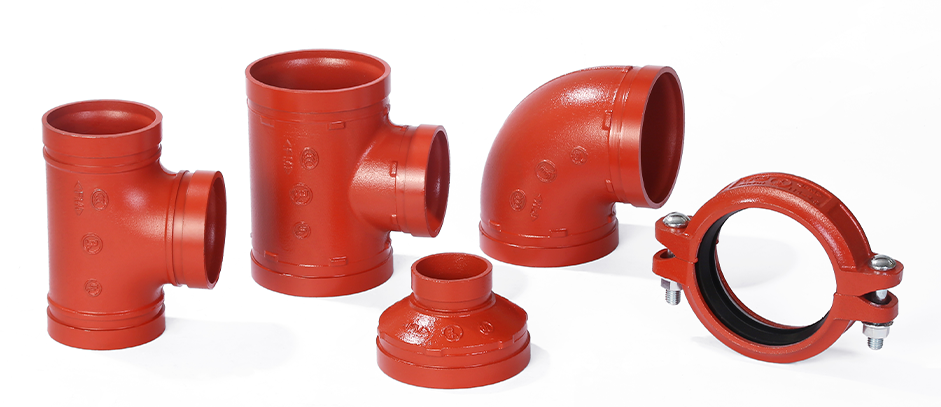
At the heart of this system lies the grooved coupling. By utilizing a cold-formed or machined groove at the end of a pipe, a coupling housing—typically made of high-strength ductile iron—is clamped over a resilient gasket to create a permanent, leak-proof seal. However, once a project manager or engineer decides to go "grooved," they are immediately faced with the industry’s most persistent debate: Rigid Coupling vs. Flexible Coupling.
The question of "which one is better" is actually a misunderstanding of mechanical design. In the world of piping, "better" is entirely dependent on the specific stresses the system will encounter. Are you building a vertical riser in a 50-story skyscraper where structural stability is paramount? Or are you designing a pump room in a seismic zone where the system must "give" and sway to avoid a catastrophic rupture?
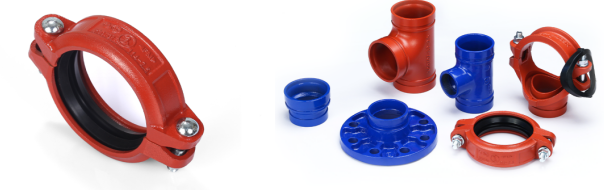
The choice between rigid and flexible couplings is a choice between stability and adaptability.
Rigid couplings are designed to act like a continuous beam. They eliminate movement at the joint, providing the structural integrity needed for long straight runs and heavy valve headers.
Flexible couplings, conversely, act as a mechanical joint. They are engineered with internal clearances that allow for angular deflection, rotation, and axial movement—essential for absorbing thermal expansion and vibration.
Choosing the wrong type isn't just a technical oversight; it can lead to pipe sagging, joint fatigue, or even system failure during a critical event like a fire. This guide is designed to peel back the technical layers of both options, helping you navigate the nuances of piping system design. Whether you are optimizing for installation speed, cost-efficiency, or long-term durability, understanding the synergy between these two components is the key to a successful project.
As we dive deeper into the mechanics of each, remember that the goal is not to find a winner, but to find the perfect match for your infrastructure’s unique heartbeat.
A rigid grooved coupling is the engineer’s primary tool for creating a piping joint that acts as a single, continuous unit. While the concept of a grooved system implies a certain level of mechanical "play," the rigid coupling is specifically designed to eliminate that movement entirely. It is engineered to provide a connection that possesses the structural characteristics of a welded or flanged joint, ensuring that the piping remains straight and immovable once the bolts are tightened.
The defining feature of a ductile iron rigid coupling is its unique housing design. Most modern rigid couplings utilize an "angled bolt pad" or a "tongue and groove" mechanism. As the bolts are tightened, the angled pads slide against each other, forcing the coupling halves to move in opposite directions. This action clamps the coupling’s internal "keys" firmly into the pipe grooves around the entire circumference.
By exerting this concentrated pressure, the coupling effectively "grips" the pipe ends, preventing any axial movement, rotation, or angular deflection. This results in zero deflection, a critical requirement for systems where the alignment must be maintained with surgical precision.
In long, horizontal piping runs, a major concern for contractors is "snaking"—the tendency of a piping string to wander or sag between supports. Because a rigid coupling provides significant structural integrity, it allows the piping to behave like a continuous beam. This rigidity is essential for maintaining the aesthetic and functional straightness of the line.
Furthermore, because the joint is immovable, it provides excellent structural support for heavy components. When you are installing heavy valves, meters, or headers, a rigid coupling ensures that the weight of these components doesn't cause the joint to dip or shift, which could lead to stress fractures or leaks over time.
One of the most practical advantages of the rigid coupling is its impact on the project’s bottom line. In a system joined by rigid couplings, the hanger and support requirements are generally lower than those of a flexible system. Because the pipe acts as a rigid unit, you can follow standard hanger spacing rules similar to those used for welded steel pipe.
Additionally, the installation is highly predictable. There is no need to account for pipe "expansion" at every joint, which simplifies the layout for the installation team. For vertical risers in high-rise buildings, rigid couplings are often the preferred choice because they can support the weight of the water column and the pipe itself without allowing the vertical string to compress or buckle.
You should prioritize a rigid coupling in any scenario where the piping must remain fixed in space. This includes:
Mechanical Rooms: Where alignment with pumps and boilers is critical.
Vertical Risers: To ensure the pipe doesn't shift vertically.
Valve Assemblies: To provide a stable platform for heavy mechanical parts.
By utilizing high-quality ASTM A536 ductile iron rigid couplings, you ensure that the backbone of your project remains stable, secure, and perfectly aligned for decades to reach.
While a rigid coupling focuses on total immobility, a flexible grooved coupling is engineered for the exact opposite: controlled movement. It is the "dynamic" component of a piping system, designed with intentional internal clearances that allow the joint to remain leak-proof even when the pipes shift, bend, or expand. In modern engineering, a flexible coupling acts as a safeguard against the natural forces of physics that would otherwise tear a rigid system apart.
The secret to a flexible grooved coupling lies in the geometry of the housing. Unlike a rigid coupling, which clamps down tightly to lock the pipe in place, the housing of a flexible coupling is slightly wider than the pipe's outside diameter and the groove itself. This "loose" fit is intentional. When installed, there is a small gap between the pipe ends, and the coupling’s "keys" sit in the grooves with enough room to allow the pipe to move without losing its seal.
The resilient gasket inside remains under compression, maintaining a vacuum-tight seal even as the metal components around it shift. This allows the joint to accommodate three specific types of movement: angular deflection, rotation, and axial movement.
One of the most critical roles of a flexible coupling is managing thermal expansion. Metal pipes expand when hot and contract when cold. In long piping runs, this change in length can generate thousands of pounds of force. A series of flexible couplings acts like an accordion, allowing each pipe section to grow or shrink within its own joint. This prevents the system from buckling or putting dangerous stress on anchors and equipment.
Furthermore, in seismic protection design, flexible couplings are a non-negotiable requirement. During an earthquake, a building sways and vibrates. A rigid piping system would snap under these forces. However, a flexible system can "snake" and sway with the building, absorbing the energy of the movement through angular deflection at each joint, ensuring that life-saving water remains available even after a major tremor.
Flexible couplings are the primary choice for:
Expansion Joints: To replace expensive and bulky bellows-type expansion joints.
Curved Piping: To create slight curves in a pipeline without the need for specialized elbow fittings.
Equipment Connections: Near pumps and chillers to isolate vibration.
By choosing a high-quality, flexible grooved coupling, you're not just joining pipes—you're infusing the entire system with resilience, enabling it to operate safely in ever-changing environments.
Understanding the technical distinctions between rigid and flexible couplings is essential for optimizing your piping system design. While both serve the same primary goal of joining pipes securely, their mechanical behavior under load creates a clear divide in how they should be applied. Below is a detailed comparison of their core differences.
The most obvious difference lies in angular deflection. A rigid coupling is designed to act like a continuous beam; it allows for virtually zero movement. Once tightened, the pipe stays exactly where it was positioned. In contrast, a flexible grooved coupling is engineered to allow for a specific degree of deflection—typically between 1 to 5 degrees depending on the pipe size. This allows the pipeline to follow uneven terrain or create slight curves without the need for additional elbows.
The choice of coupling significantly impacts your hanger spacing and structural layout. Because rigid couplings provide structural support, you can treat the pipeline as a solid unit, following standard support distances. However, a system using flexible couplings is "fluid." Without proper anchoring, a flexible line will sag or "snake" under pressure. Consequently, flexible systems require more strategic placement of anchors and guides to control the direction of movement and ensure the weight of the water doesn't distort the piping layout.
In the real world, piping alignment is rarely perfect. Foundations settle, and measurements can be off by fractions of an inch. Rigid couplings require precise alignment; if the pipes aren't perfectly centered, forcing the coupling shut can put undue stress on the grooves. Flexible couplings are far more forgiving. Their internal clearance allows them to accommodate minor misalignments, making them the preferred choice for retrofit projects or installations in tight, difficult-to-access spaces.
Feature | Rigid Coupling | Flexible Coupling |
Movement | Zero (Rigid Connection) | Angular & Axial Movement |
Primary Use | Straight runs, Risers | Vibration areas, Seismic zones |
Hangers | Standard Spacing | Requires more anchors/guides |
Alignment | High Precision Required | Forgiving of Misalignment |
By weighing these factors, you can determine which coupling provides the best balance of stability and adaptability for your specific infrastructure needs.
Determining whether to use a rigid or flexible coupling depends entirely on the operational environment and the structural goals of your piping system design. Neither is a universal solution; rather, they are tools used to address specific mechanical challenges. Below are the definitive scenarios where each type excels.
Rigid couplings are the preferred choice for the "backbone" of your infrastructure. Their primary role is to provide stability and maintain a fixed position.
Long Straight Horizontal Runs: In large facilities like warehouses or industrial plants, hundreds of meters of piping must remain perfectly straight. Using rigid grooved couplings ensures the line does not "snake" or sag, maintaining a professional aesthetic and consistent flow characteristics.
Vertical Risers: In multi-story buildings, the weight of the water column in a vertical pipe is immense. Rigid couplings lock the pipe sections together, preventing the riser from compressing or buckling under its own weight.
Valve Headers and Mechanical Rooms: Precision is key when connecting to pumps, boilers, or heat exchangers. Rigid couplings ensure that valves and sensitive equipment stay perfectly aligned with their connection points, preventing flange stress and potential leaks at equipment interfaces.
Flexible couplings are the "shock absorbers" of the system. They are essential in environments where movement is expected or where the equipment must be protected from physical energy.
Fire Pump Room Connections: Fire pumps generate high-frequency vibrations and hydraulic surges. Placing flexible grooved couplings near the suction and discharge lines isolates these vibrations, preventing them from traveling down the pipe and causing fatigue failure in the rest of the system.
Seismic Zones: In regions prone to earthquakes, a rigid system is a liability. Flexible couplings provide the angular deflection necessary for the piping to sway with the building's movement. This "ductility" prevents the pipes from snapping during a seismic event, ensuring the fire protection piping remains functional when it is needed most.
Expansion and Contraction Zones: For outdoor piping or systems carrying varying water temperatures, thermal expansion is a constant threat. Flexible couplings allow each pipe length to expand and contract individually, effectively acting as built-in expansion joints.
Curved Layouts: In some field conditions, the piping path may have a slight curve. Flexible couplings allow for minor offsets (often 1° to 3° per joint), enabling the contractor to navigate slight turns without using expensive elbows.
For most large-scale projects, the answer isn't "one or the other," but rather a strategic mix of both. By using rigid couplings for the majority of straight runs and vertical supports, and deploying flexible couplings at pump interfaces, building expansion joints, and seismic transitions, you create a fire protection piping system that is both structurally sound and mechanically resilient.
In advanced mechanical engineering, the question isn't usually which coupling is better, but rather how to combine them to achieve engineering synergy. A truly resilient piping system design often utilizes a "Hybrid Approach," leveraging the structural strength of rigid couplings and the dynamic flexibility of flexible ones within the same network. This strategy allows engineers to optimize for both stability and movement management.
The most common hybrid application involves using rigid grooved couplings for the primary horizontal and vertical runs of a building's infrastructure. This ensures that the main headers and risers remain perfectly aligned and securely supported. However, as these lines approach high-stress zones—such as building expansion joints or high-vibration equipment—the system transitions to flexible grooved couplings.
By strategically placing a series of flexible joints at these critical junctions, engineers create "stress relief zones." These zones allow the rigid backbone of the system to remain stable while providing the necessary "give" to absorb external forces that would otherwise cause a rigid-only system to crack or leak.
One of the most effective uses of a hybrid system is in the creation of expansion loops. Instead of purchasing expensive, specialized expansion bellows, contractors can design a "U" or "L" shaped loop using a combination of fittings. By utilizing flexible couplings at the corners of these loops, the piping can expand and contract safely across long spans. The rest of the straight run can remain rigid, ensuring the pipes do not sag between the hangers, thus maintaining the overall structural support of the installation.
In a fire pump room, the connection to the pump itself is almost always made with flexible couplings to act as a vibration damping mechanism. However, as the pipe moves further away from the pump and transitions into the main distribution headers, it is common to switch to rigid couplings. This ensures that while the pump's vibration is isolated, the rest of the facility's piping remains straight, easy to inspect, and firmly anchored to the building's structure.
A hybrid system is the pinnacle of engineering optimization. It reduces the overall cost of the project by minimizing the need for specialized seismic or thermal components while maximizing the system's lifespan. By utilizing high-quality ductile iron fittings from a single trusted manufacturer like Jianzhi, you ensure that both the rigid and flexible components share the same metallurgical properties and gasket standards, ensuring a seamless, high-performance integration throughout your entire project.
In the world of fluid handling and life safety, a coupling is much more than a simple mechanical clamp. It is a safety-critical component that must perform under extreme pressure and environmental stress. Regardless of whether your project dictates a rigid or flexible design, the quality standards and certifications of the fittings are non-negotiable. Using uncertified components in a fire protection piping system is not just a technical risk—it is a legal and financial liability.
The global gold standards for piping components are UL (Underwriters Laboratories) and FM (Factory Mutual). A UL/FM certified coupling has undergone destructive testing that simulates the worst-case scenarios.
Pressure Testing: These couplings are tested to withstand at least four times their rated working pressure without leaking or bursting.
Durability: They are subjected to rigorous vibration and aging tests to ensure the ductile iron and internal gaskets won't degrade over decades of service.
For the engineer, these stamps are proof of quality assurance. For the insurance provider, they are a requirement for coverage. In many jurisdictions, installing non-certified couplings in a fire sprinkler system will result in a failed building inspection and the immediate halting of the project.
The performance of both rigid and flexible couplings depends entirely on their metallurgy. High-quality couplings are manufactured from ASTM A536 Grade 65-45-12 ductile iron. This specific grade provides the perfect balance of tensile strength and ductility. Lower-grade castings may be brittle, leading to "stress cracking" when the bolts are torqued or when the system experiences a sudden pressure surge (water hammer). By insisting on quality pipe fittings made to ASTM standards, you ensure that the housing can flex slightly under load without fracturing.
Certifications also mandate a level of manufacturing consistency. Factories like Jianzhi maintain strict traceability for every batch of iron poured. This means that every coupling can be traced back to its original melt and chemical analysis. This level of oversight ensures that the thousandth coupling on your job site is identical in strength and precision to the first.
Beyond UL and FM, global projects may require compliance with other regional standards such as CE (Europe), VdS (Germany), or LPCB (UK). Ensuring your supplier has a robust portfolio of international certifications is the best way to guarantee that your materials will be accepted by local authorities and fire marshals anywhere in the world. When you prioritize these non-negotiable specs, you are investing in the long-term safety and integrity of your infrastructure.
The debate between Rigid Coupling vs. Flexible Coupling is not about determining which product is superior, but about identifying which mechanical behavior aligns with your project’s goals. As we have explored, the success of a piping system design hinges on the strategic application of these two distinct technologies to manage structural integrity and environmental stress.
When your priority is stability, alignment, and structural support, the rigid coupling is your best ally. It is the essential component for long horizontal spans, vertical risers, and valve headers where movement must be eliminated to ensure a professional, secure installation. By acting as a continuous beam, it simplifies hanger placement and provides the rigid backbone necessary for complex mechanical rooms.
Conversely, when your priority is resilience, movement, and vibration damping, the flexible coupling is indispensable. It serves as the system's "shock absorber," protecting your infrastructure from the destructive forces of thermal expansion, pump vibrations, and seismic activity. In any project located in a high-risk seismic zone or involving high-temperature fluctuations, the flexible coupling provides the "give" that prevents catastrophic failure.
For the modern contractor and engineer, a hybrid system is almost always the most optimized choice. By combining the strengths of both couplings—using rigid joints for support and flexible joints for movement—you create a high-performance network that is both durable and adaptable.
However, the hardware is only as good as the manufacturer behind it. Regardless of the coupling type, always insist on UL/FM certified products made from high-grade ductile iron. Partnering with an experienced manufacturer like Jianzhi ensures that you receive the technical support, metallurgical consistency, and international compliance necessary to pass inspection and protect lives.
The reliability of your fire protection piping system depends on the decisions made during the design phase. Don’t leave your project’s safety to chance. If you are currently drafting a specification or preparing a bid, our team of experts is ready to assist you with technical calculations, product samples, and detailed catalogs. Contact us today to ensure you are using the right coupling for the right job, and let’s build an infrastructure that stands the test of time.
SAFER
PRODUCT INFO
ABOUT JIANZHI
TECH DATA
Contact Us
E-mail: sales1@jianzhi-fitting.com
Tel: +86 15822792427
Office In Tianjin:
Heping District, Tianjin, China.
Production Base 1:
Chifeng, Inner Mongolia, China.
Production Base 2:
Tangshan City, Hebei Province, China.
Production Base 3:
Schelei Street,Baicoi City,Prahova County,Romania