Jun. 23, 2026
The commercial viability of large-scale mechanical installations is dictated by macro-economic pressures. For procurement teams, industrial engineers, and EPC contractors, managing structural integrity alongside volatile material pricing, strict labor compliance, and compressed project schedules has become a daily balancing act. Within these massive piping layouts, selecting a pipeline connection method is no longer just a minor field preference—it is a critical choice that directly impacts on-site safety margins and total operational expenditures.
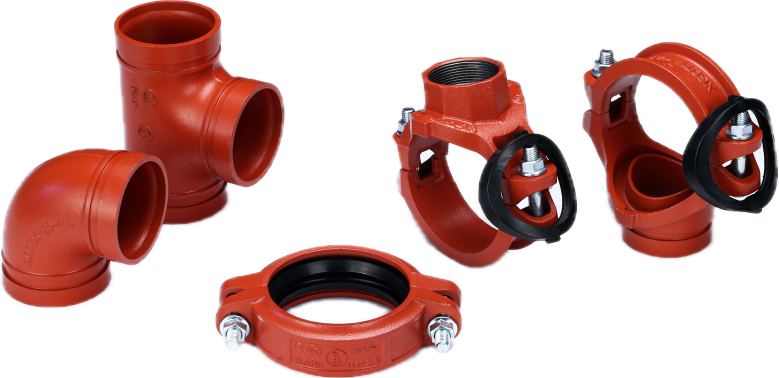
Opting for the wrong joint mechanism or a mismatch in material grade can lead to systemic failures. A single leaking joint due to incorrect tolerances can halt entire industrial networks, resulting in expensive downtime, compromised fire protection loops, and regulatory penalties. Traditional selection processes frequently overlook the total lifetime cost of field assembly, focusing entirely on upfront component pricing while ignoring on-site installation labor, inspection protocols, and long-term maintenance accessibility.
To optimize fluid network reliability, modern engineering specifications must evaluate three fundamental operational criteria:
l Fluid Media Dynamics: Evaluating chemical compatibility, temperature ranges, and abrasive characteristics to prevent accelerated internal pipe wear.
l System Pressure Demands: Ensuring all components meet strict regulatory pressure ratings, particularly high-volume municipal or fire infrastructure requirements.
l Installation Environments: Adapting to physical space constraints, seismic zones, and the availability of skilled field technicians.
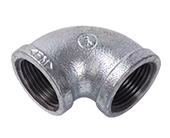
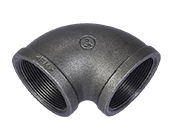
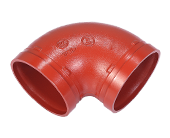
Balancing these factors requires an agile, multi-technology layout approach. For large-diameter pipelines where rapid assembly and vibration isolation are paramount, specifying heavy-duty grooved pipe fittings provides an efficient, modular solution. Conversely, for compact, high-precision, small-diameter piping branches where a permanent mechanical seal is essential, relying on a premium malleable iron pipe fitting system remains the industry baseline.
By analyzing these technologies at the design phase, an experienced pipe fitting factory can help procurement teams reduce material waste, accelerate construction schedules, and build resilient, leak-free infrastructure capable of withstanding extreme commercial wear.
Selecting the right industrial hardware requires analyzing the specific mechanical parameters of your piping system. Procurement teams frequently make the mistake of over-specifying wall thickness while neglecting the structural performance of the joints. To prevent systemic leaks, engineers must balance internal pressure benchmarks against the metallurgy of the fitting and the physical space available on site.
In high-volume municipal installations and commercial fire suppression net systems, pressure safety limits define your framework. Modern waterworks infrastructure networks commonly operate under high pressure surges, requiring components built to strict 2.5 MPa standards (equivalent to 25 bar or roughly 362 PSI).
When a pipeline operates near these upper limits, the chosen connection mechanism must handle both continuous static load and the sudden kinetic force of water hammer. A certified grooved pipe fitting relies on a heavy ductile iron housing to mechanically lock the pipe ends, distributing structural stress evenly across the circumferential groove. For smaller diameter headers, a specialized, thick-walled malleable iron pipe fitting achieves an identical pressure safety factor via high-precision tapered thread engagement.
The base material of your component determines its fatigue resistance and tensile strength. A professional pipe fitting factory separates production runs based on these strict metallurgical applications:
Ductile Iron (ASTM A536): Used as the primary housing material for a standard grooved pipe fitting. The inclusion of nodular graphite spheroids provides exceptional elongation properties and impact resistance, making it the ideal choice for high-stress, large-diameter industrial configurations.
Malleable Iron (ASTM A197): The foundational alloy for traditional threaded systems. Through a controlled annealing process, white cast iron transforms into a highly machinable material with superior tensile toughness, enabling a malleable iron pipe fitting to resist stripping or cracking when tightened to high torque values.
The geography of the layout directly dictates the choice of joining technology. In compact, high-density environments like commercial HVAC plant rooms or underground pump stations, space is limited. Threaded configurations excel in these tight areas because they require no external radial clearance beyond the outer diameter of the fitting itself.
Conversely, for open, long-distance pipelines where thermal expansion and soil settling occur, a flexible grooved pipe fitting provides a distinct advantage. The internal mechanical clearance within a grooved coupling allows the pipe to slide and flex slightly, preventing structural buckling over kilometers of exposed piping runs.
Over the past decade, a profound shift has occurred in how high-capacity mechanical pipelines are engineered. On global commercial forums and engineering networks, the comparison between cold-formed connections and traditional hot-work welding remains a highly discussed topic. As urban fire protection mandates become stricter and open-flame construction permits become more difficult to secure due to safety risks, specifying a mechanical grooved pipe fitting framework has transitioned from an alternative method to a primary global standard.
The core reason a mechanical grooved pipe fitting system dominates modern project specifications comes down to risk mitigation on the job site. Traditional pipe welding requires intensive heat, specialized safety equipment, continuous ventilation, and dedicated fire-watch personnel to prevent structural fires.
In contrast, installing a heavy-duty grooved pipe fitting is an entirely cold mechanical process. The pipe ends are prepped using a portable machine that presses a structural groove into the pipe exterior. The components are then locked together using a specialized coupling housing. This clean, spark-free installation method allows contractors to work safely in highly sensitive environments—such as retrofitting historic buildings, expanding underground transit lines, or modifying live chemical facilities—without shutting down adjacent operations.
When you analyze a high-performance grooved pipe fitting network, two major operational advantages stand out over rigid, welded setups:
Rapid Field Deployment (Speed): Time is a critical cost factor in commercial construction. A standard mechanical grooved pipe fitting joint can be assembled in a fraction of the time it takes to complete a multi-pass field weld. By positioning the pressure-responsive elastomer gasket over the pipe gap and tightening the two bolts of the ductile iron housing, installers achieve a permanent, leak-free seal within minutes. This rapid turnaround allows mechanical contractors to hit demanding project deadlines that would be impossible with traditional methods.
Dynamic Shock Absorption (Flexibility): Rigid, welded pipelines are highly vulnerable to localized stresses caused by thermal expansion, building settlement, or equipment vibration. A flexible grooved pipe fitting coupling solves this issue through its internal structural tolerances. The coupling housing engages the external groove securely while allowing a minor amount of angular deflection and axial movement. This built-in flexibility eliminates the need for expensive expansion joints, protects downstream instrumentation, and provides reliable vibration isolation near high-output pumping stations.
While a traditional malleable iron pipe fitting remains the go-to choice for low-diameter utility lines, a comprehensive grooved pipe fitting configuration excels in high-volume, large-diameter industrial networks.
The technology is highly recommended for high-rise commercial fire protection systems, where zero-leak performance and strict safety clearances are mandatory. It is equally effective for large-scale municipal waterworks infrastructure and industrial cooling loops, where long-distance pipe runs must adapt to external temperature swings and soil shifts. By sourcing these systems from an experienced, high-volume pipe fitting factory, procurement teams can ensure their projects are built with standardized components designed for rapid installation and decades of reliable service under pressure.
While large-diameter utility mains have increasingly shifted toward the modular speed of a mechanical grooved pipe fitting, traditional threaded infrastructure remains indispensable for modern fluid mechanics. In high-density piping configurations, small-diameter branching networks (typically 2 inches and under), and systems carrying volatile gasses or high-temperature steam, the classic malleable iron pipe fitting remains an industry benchmark. Choosing this time-tested method isn't about resisting modernization; it’s about applying the right mechanical solution to the right physical environment.
A premium malleable iron pipe fitting establishes an incredibly tight, structural bond through metal-to-metal contact. Utilizing standardized NPT (National Pipe Taper) or BSPT (British Standard Pipe Taper) profiles, the threads are machined on a slight taper. As the pipe is turned into the fitting, the escalating mechanical interference creates a deep physical seal along the entire spiral groove.
Unlike the elastomer gaskets used in a standard grooved pipe fitting, this all-metal engagement can comfortably withstand intense thermal cycling, pressurized steam distribution, and chemical media that would rapidly degrade synthetic rubber compounds. This makes threaded connections highly preferred for small-bore fuel distribution lines, compressed air arrays, and chemical plant processing loops.
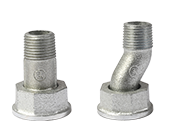
A common criticism of older threaded systems is that they are difficult to modify once installed; to replace a single central component, a technician might have to unthread meters of sequential piping. Modern layout designs solve this limitation by strategically integrating a specialized pipe union fitting.
A pipe union fitting acts as a modular disconnect point within a rigid threaded line. Composed of three interlocking pieces—a nut, a female end, and a male end—the union allows maintenance crews to instantly break and reconnect a piping run at any time without rotating the adjacent pipes.
lModular Maintenance: By installing a pipe union fitting next to inline regulators, control valves, or booster pumps, you create an isolated service point.
Zero-Damage Swaps: Technicians can replace a faulty valve or clear a localized clog without cutting the pipe or destroying existing connections.
System Synergy: Combining these rigid threaded elements with flexible grooved pipe fittings on larger headers gives you a hybrid network that balances structural strength with maintenance accessibility.
Achieving a tight, leak-free seal on a threaded line leaves no margin for error during production. If the thread pitch is slightly misaligned or the casting has internal microscopic voids, the joint will leak under pressure.
To prevent these defects, sourcing your inventory from a dedicated, high-capacity pipe fitting factory is essential. High-quality production lines utilize multi-axis CNC machines to cut threads with absolute consistency, ensuring that when your team joins a malleable iron pipe fitting to a pipe on-site, the threads bite smoothly, seal tightly, and deliver the reliable service life your project demands.
Engineering a high-pressure fluid network requires choosing components that guarantee real-world safety under pressure. In modern industrial procurement, relying on undocumented or uncertified components is an operational gamble that often leads to failure. Regulatory bodies and commercial insurance providers have made global compliance an absolute requirement, turning third-party quality stamps into an essential part of the procurement process.
RISK ANALYSIS: GENERIC VS. CERTIFIED | ||
FAILURE POINT | GENERIC PIPE FITTINGS | CERTIFIED SYSTEMS |
Casting Quality | Microscopic sand holes | Defect-free matrix |
Wall Thickness | Uneven / Out-of-spec | Unified dimensions |
Thread Precision | Loose / Stripping | Exact NPT/BSPT bite |
Gasket Resilience | Accelerated cracking | Pressure-responsive |
Cheap, off-brand alternatives might look identical to high-quality components when sitting on a warehouse pallet, but they hide structural dangers that manifest once the system is pressurized. In a low-grade malleable iron pipe fitting, procurement teams often encounter uneven wall thicknesses, internal sand holes (microscopic casting voids), or out-of-spec thread tolerances that cause slow, persistent leaks.
For a mechanical grooved pipe fitting, a minor flaw in the housing radius or an inferior elastomer compound can result in sudden joint separation when the line hits its maximum operating pressure. The resulting water damage, system downtime, and potential liability costs can quickly surpass any minor savings gained from buying uncertified hardware.
This risk is exactly why specifying FM/UL certified hardware is a non-negotiable step for modern industrial projects. Factory Mutual (FM) and Underwriters Laboratories (UL) testing protocols do not simply review paperwork; they subject components to extreme physical testing:
Hydrostatic Burst Testing: Ensuring the fitting can withstand pressures multiple times its rated limit without fracturing.
Severe Bending Moments: Verifying that a mechanical grooved pipe fitting coupling can handle structural shifting and seismic deflection.
Accelerated Gasket Aging: Testing elastomer compounds under extreme temperatures to guarantee they remain flexible and leak-free for decades.
As a premier pipe fitting factory backed by 44 years of experience since 1982, we do not treat these international certifications as an afterthought. Managing a massive workforce of over 4,000 employees, our production bases utilize high-precision, automated DISA molding lines to ensure perfect geometric consistency across every manufacturing run.
Every single grooved pipe fittings batch and threaded component undergoes a mandatory 100% air-pressure test before packaging. When a municipal inspector or site engineer checks your pipeline layout, seeing those stamped FM/UL certified markings ensures immediate regulatory clearance, protecting your project timeline and your long-term capital investment.
Fulfilling the hardware requirements for a multi-million dollar piping layout involves more than evaluating product performance. In the international trade arena, a procurement team’s success hinges on balancing unit costs against logistical overhead, customs duties, and maritime freight volatility. For global purchasing agents, sourcing a heavy-duty mechanical grooved pipe fitting or a precision-threaded network requires finding a partner who understands the nuances of cross-border customs optimization.
One of the most complex challenges in modern pipeline procurement is navigating trade protection regional policies. Many major markets—including the United States, members of the European Union, and several South American nations—impose steep anti-dumping duties and restrictive tariffs on iron castings originating from Asia. Relying on a single manufacturing origin can leave an industrial project vulnerable to sudden regulatory cost shocks or lengthy customs clearance delays.
Our organization addresses this supply chain vulnerability directly through an agile, dual-base manufacturing model. By operating high-volume production facilities in both Hebei, China, and Baicoi, Romania, we provide international buyers with a functional tariff shield. If a project’s destination country carries punitive trade barriers for Asian steel and iron castings, order routing can seamlessly shift to our European footprint. This strategic flexibility allows buyers to secure identical, high-tolerance grooved pipe fittings while legally minimizing total landed costs and clearing regional trade compliance audits smoothly.
Coordinating international maritime logistics should not introduce extra friction to a field construction schedule. Our centralized trade hub, operating out of the Tianjin export office, manages the entire documentation and logistics pipeline for international accounts. From drafting clear mill test reports to organizing freight consolidation for mixed containers—combining large-diameter grooved pipe fitting inventories with small-bore malleable iron pipe fitting runs—our trade specialists keep shipments moving predictably across global trade lanes.
Partnering with an established, high-volume pipe fitting factory that brings 44 years of experience (since 1982) and a dedicated workforce of over 4,000 employees minimizes the risks of fragmented sourcing. Rather than dealing with multiple third-party suppliers, procurement managers gain a single point of accountability. Every component, whether a large mechanical coupling or a small threaded coupling, is produced to identical metallurgical standards, subjected to the same 100% air-under-water pressure tests, and carries full FM/UL certified designations.
Ultimately, choosing the right components requires aligning the physical layout with project realities. For primary distribution mains, fire protection networks, and seismic-prone sectors, specifying a flexible grooved pipe fitting system delivers the speed, durability, and vibration isolation modern infrastructure demands. For small-bore secondary lines, gas distribution, and high-density manifolds, the rigid precision of a premium malleable iron pipe fitting remains the practical standard.
By understanding how these systems complement each other—and sourcing them through a geographically diversified supply chain—engineering firms can protect their project timelines, minimize field labor risks, and build fluid networks designed to operate reliably for decades.
SAFER
PRODUCT INFO
ABOUT JIANZHI
TECH DATA
Contact Us
E-mail: sales1@jianzhi-fitting.com
Tel: +86 15822792427
Office In Tianjin:
Heping District, Tianjin, China.
Production Base 1:
Chifeng, Inner Mongolia, China.
Production Base 2:
Tangshan City, Hebei Province, China.
Production Base 3:
Schelei Street,Baicoi City,Prahova County,Romania