Jun. 23, 2026
The industrial landscape across South America is experiencing an unprecedented capital investment supercycle. Driven by massive copper expansions like the Los Azules project in Argentina under the newly extended RIGI (Incentive Regime for Large Investments) framework, and Brazil’s staggering $77 billion mining pipeline targeted through 2030, engineering procurement has taken on a multi-million-dollar significance. In these massive infrastructure networks, the foundational engineering choice between a traditional welded joint and a modern mechanical grooved pipe fitting is no longer just a field preference—it is a critical macro-economic factor dictating whether a project finishes on budget or suffers catastrophic timeline overruns.
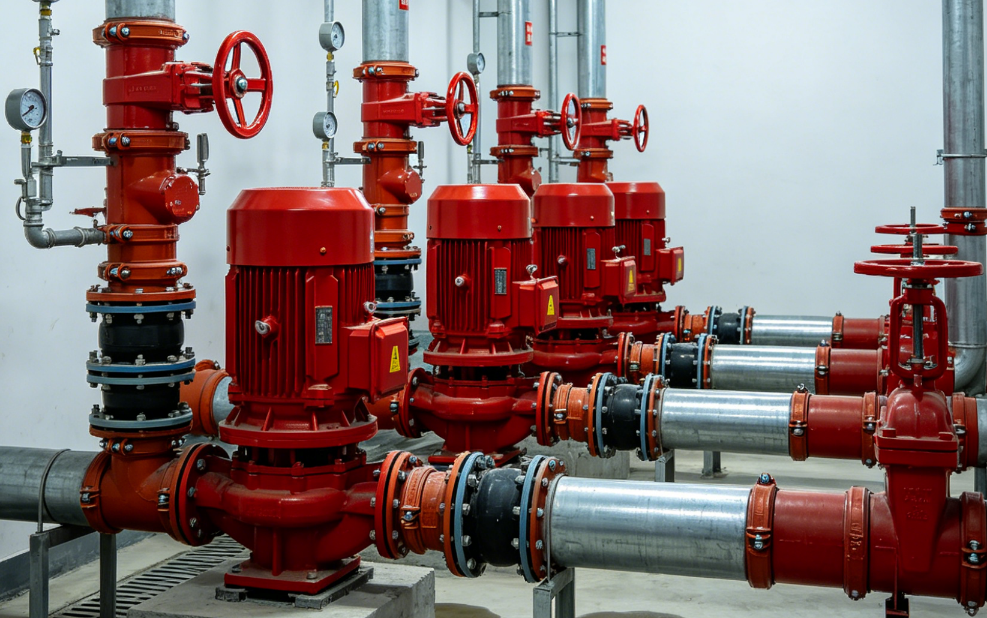
For decades, high-pressure liquid and slurry transport lines throughout Latin America defaulted to field welding. While a welded connection offers absolute rigidity, the operational realities of 2026—characterized by volatile material pricing, strict environmental compliance, and extreme territorial geography—have exposed its vulnerabilities.
On the other side of the spectrum, the deployment of a heavy-duty grooved pipe fitting introduces an agile, mechanical alternative. By securing pipe segments with a pressure-responsive elastomer gasket encased in a ductile iron housing, a grooved pipe fitting layout delivers identical pressure performance up to 2.5 MPa standards while adding structural benefits that a rigid, welded line simply cannot match.
As an established pipe fitting factory backed by 44 years of experience since 1982, we recognize that infrastructure projects from the Andean peaks of Peru to the logistics corridors of Minas Gerais face unique operational stress. A pipeline must be resilient enough to handle high seismic activity, simple enough to construct in remote areas lacking stable electrical grids, and fast enough to assemble to mitigate skyrocketing labor expenses.
With more than 4,000 employees across our manufacturing footprint and a dedicated Tianjin trade office managing global distribution, we specialize in supplying FM/UL certified grooved solutions designed specifically for these harsh environments. In this comparative guide, we will unpack the technical, financial, and logistical variables that define the performance of a grooved pipe fitting network versus a welded pipeline, helping your engineering team make the optimal procurement decision for the South American market.
One of the most pressing hurdles confronting engineering, procurement, and construction (EPC) companies across Latin America is the severe shortage of qualified technical personnel. Securing ASME-certified welders for a large-scale pipeline installation in remote areas like the Atacama Desert or the Peruvian highlands has become exceptionally difficult. This supply-and-demand mismatch has significantly driven up daily labor rates and led to costly project delays. Relying on a grooved pipe fitting infrastructure design allows contractors to completely bypass this specialized talent bottleneck.
Field welding is an intensive, multi-step craft. Each joint demands meticulous beveling, precise alignment, multi-pass welding by a certified professional, and subsequent non-destructive testing (NDT) such as X-ray inspection to identify internal defects. Additionally, welding inherently introduces open flames, necessitating strict hot-work permits and dedicated fire-watch crews, which further slows down daily output.
Transitioning to a grooved pipe fitting system redefines the labor structure entirely. Instead of relying on a rare, highly specialized skillset, the assembly of a mechanical grooved pipe fitting joint can be carried out by standard mechanical installers using simple hand tools or impact wrenches. The pipeline installation process is simplified into three straightforward actions:
1. Roll or cut a precise groove into the pipe end using a portable hydraulic machine.
2. Position the pressure-responsive rubber gasket over the pipe gap.
3. Fasten the ductile iron coupling housing over the gasket using standard bolts.
Because the alignment and verification steps are integrated directly into the design of the grooved pipe fitting housing, the possibility of human error during assembly is drastically lowered. There is no need to wait hours for a joint to cool down or for an X-ray technician to clear a weld line.
Field metrics consistently demonstrate that a standard installation crew can install a grooved pipe fitting network up to 70% faster than a comparable welded system. When a project covers several kilometers of fire-protection loops or mining slurry lines, this efficiency gains you weeks on your completion deadline. By switching from welding to a high-quality mechanical grooved pipe fitting strategy, project directors across South America can keep their timelines intact, even when faced with regional labor shortages.
Operating in South America often means confronting some of the most unforgiving geographical and regulatory terrains on Earth. Whether it is a copper project sitting at 4,000 meters above sea level in the Chilean Andes, a lithium brine operation in the high-altitude flats of Argentina, or an iron ore facility deep within the localized environmental licensing zones of Brazil, logistics dictate engineering choices. Sourcing, transporting, and maintaining heavy equipment in these isolated sectors turns conventional pipeline construction into a logistical nightmare. This severe environmental hurdle is a primary driver behind the massive regional shift toward the modern grooved pipe fitting.
To complete a welded pipeline in a remote mountain range, an EPC contractor must haul massive, fuel-hungry power generators, heavy welding rigs, and fragile non-destructive testing (NDT) equipment up narrow, unpaved mountain roads. At extreme altitudes, lower oxygen levels can destabilize open-flame arcs, compromising the purity of the weld and increasing the risk of joint failure under pressure. Furthermore, tightening environmental rules—such as Brazil's recent ANM safety resolutions and strict regional water-use licensing—heavily penalize the high environmental footprint, pollution risks, and fire hazards tied to field welding operations.
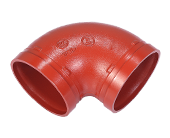
A grooved pipe fitting strategy completely redefines remote project deployment by eliminating the need for heavy industrial power sources and open flames. The pipe ends are prepared using portable, hydraulic roll-grooving machines that cold-form a precise circumferential channel into the pipe wall without removing metal or reducing structural thickness. Once the pipe is prepped, a mechanical grooved pipe fitting—such as a 90-degree elbow, a reducing tee, or a standard coupling housing—can be locked into position in less than five minutes.
Because this method relies entirely on a cold mechanical interlock, a grooved pipe fitting arrangement can be installed in zero-oxygen environments, rainy rainforest conditions, or high-wind mountain passes where welding is structurally impossible. This flexibility makes the heavy-duty grooved pipe fitting the absolute baseline standard for highly demanding mining applications:
High-Abrasion Slurry Lines: Transferring ore concentrates from processing plants to shipping ports requires thick-walled pipe networks that can be quickly rotated to distribute internal wear evenly. A modular grooved pipe fitting enables quick line rotations without cutting or destroying the pipe.
Deep Mine Dewatering: Pumping water out of deep underground shafts demands high-pressure connections. Our certified grooved pipe fitting lines comfortably sustain the required pressure levels while resisting underground moisture.
Tailings Management: Managing waste streams requires rapid, flexible pipeline redirection as dam levels change. The fast connect-and-disconnect characteristic of a mechanical grooved pipe fitting layout allows maintenance crews to adapt lines on the fly.
By replacing the heavy logistics of field welding with the compact portability of a grooved pipe fitting system, resource companies operating across South America can significantly de-risk their infrastructure, simplify compliance with strict local environmental laws, and accelerate their time to first production.
Geographically, the western ridge of South America sits directly on the volatile Pacific Rim of Fire. Countries like Chile, Peru, and Colombia face some of the highest seismic activity levels globally. For an infrastructure or industrial pipeline engineer, this geographic reality makes seismic design a mandatory requirement rather than an optional safety factor. When an earthquake hits, a rigid piping network behaves completely differently than a flexible grooved pipe fitting system, often determining whether a facility maintains emergency operations or suffers sudden system failure.
Field welding creates a continuous, completely rigid metallic line. While this rigidity is excellent for preventing static leaks, it is highly vulnerable during seismic events. When the earth shifts, building foundations move, and storage tanks settle, a welded pipeline cannot bend or stretch to absorb the sudden kinetic energy. Instead, the entire mechanical stress concentrates directly at the rigid joint locations or the pipe anchors. This concentration of force frequently leads to stress fractures, torn pipe hangers, and catastrophic fluid releases. In fire protection loops or mining chemical lines, a ruptured weld can halt plant operations instantly, resulting in expensive downtime.
Designing a pipeline with a flexible grooved pipe fitting approach solves this vulnerability through mechanical design. A flexible grooved pipe fitting coupling does not bind the pipe ends tightly together in a rigid lock. Instead, the coupling housing keys engage the pipe grooves with precise tolerances that allow for controlled mechanical movement:
Angular Deflection: A flexible grooved pipe fitting allows the pipe ends to misalign by several degrees without breaking the seal. This lets the pipeline flex around corners or bend during an earthquake.
Axial Displacement: The slight gap design inside a grooved pipe fitting coupling allows the pipe sections to expand and contract longitudinally, absorbing earth compression and expansion safely.
Rotational Allowance: As buildings sway, the grooved pipe fitting assembly can rotate slightly along its axis, relieving torsional stress that would otherwise snap a welded joint.
Beyond major earthquakes, industrial fluid networks face daily stress from equipment vibration. Large-scale waterworks, mining thickeners, and desalination plants across South America use high-kilowatt pumps that generate constant, intense harmonic vibrations. In a welded layout, this vibration travels directly through the metal, loosening anchors and fatiguing the pipe wall over time.
By installing a series of flexible grooved pipe fitting couplings close to the pump suction and discharge lines, the internal elastomer gasket acts as a vibration dampener. This mechanical separation isolates the equipment shock, shields the downstream pipeline from fatigue, and lowers overall noise levels. For South American engineers building long-term infrastructure, selecting a certified grooved pipe fitting setup delivers built-in seismic protection and structural resilience that a rigid welded joint simply cannot match.
When mapping out financial metrics and project timelines for massive installations across Latin America, procurement teams cannot afford to rely on guesswork. Deciding whether to utilize a traditional welded joint or a modern mechanical grooved pipe fitting requires evaluating multiple distinct performance factors.
The following side-by-side comparison matrix clarifies how a mechanical grooved pipe fitting system compares to standard field welding across five core technical areas.
Evaluation Factor | Welded Pipe Joints | Grooved Pipe Fitting System |
Installation Efficiency | Low (Slow, multi-pass field welds) | High (Fast, cold-formed assembly) |
Skill Requirement | High (Certified specialized welders) | Medium (Standard mechanical crew) |
Seismic Protection | None (Rigid joint concentrates stress) | High (Flexible housing absorbs shifts) |
Tool Portability | Low (Heavy generators & rigs) | High (Compact roll-grooving tools) |
On-Site Fire Risk | High (Open-flame hazards) | None (100% cold mechanical joints) |
Whether your project is an underground mine extraction network in Peru or a commercial high-rise fire main in Brazil, passing municipal safety inspections is a mandatory milestone. In 2026, regulatory scrutiny across South America has tightened significantly. This makes third-party verification an absolute requirement during procurement.
When you source a mechanical grooved pipe fitting from our production line, you are investing in a product that carries full global compliance. Every single grooved pipe fitting we produce features prominent FM/UL certified designations. These international stamps of approval provide local inspectors, insurance underwriters, and site engineers with full assurance that the grooved pipe fitting network will perform reliably up to its maximum pressure ratings without leaking or suffering material fatigue.
Sourcing components for a multi-million-dollar infrastructure project requires a partner with the manufacturing capacity to deliver consistent quality without lead-time bottlenecks. As a premier pipe fitting factory established back in 1982, our brand leverages 44 years of experience focused purely on metallurgical perfection.
With a skilled workforce of over 4,000 employees operating our advanced, automated production bases, we maintain strict control over every stage of the manufacturing process—from raw material melting to final CNC machining. When an EPC contractor specifies our grooved pipe fitting lines, they are choosing components built to identical geometric tolerances, ensuring that every mechanical joint aligns perfectly on the job site.
Managing a successful procurement strategy for major infrastructure developments across South America requires looking beyond on-site installation advantages. To truly protect your project margins, you must account for the global logistics network, regional import regulations, and the long-term reliability of your supply chain. For a modern engineering team, sourcing a heavy-duty mechanical grooved pipe fitting involves finding a partner capable of navigating cross-border customs seamlessly while delivering uncompromised hardware quality.
Importing industrial components into countries like Brazil, Argentina, or Colombia can be challenging due to shifting tariff structures and protective trade barriers. Relying on a single manufacturing origin leaves your pipeline project vulnerable to sudden cost spikes or sudden customs bottlenecks.
Our group provides a direct solution to this challenge through our unique, dual-base manufacturing model. By operating high-volume production bases in both China and Baicoi, Romania, we give South American procurement managers the flexibility to route their grooved pipe fitting orders through the most tariff-efficient location. If your regional trade agreement penalizes Asian steel or iron imports, we can supply the identical grooved pipe fitting specifications directly from our EU-origin factory, helping you legally and safely avoid steep import penalties.
Coordinating international logistics shouldn't add extra stress to your construction timeline. Our specialized Tianjin export office operates as the central coordination point for all South American trade accounts, handling the heavy lifting of global documentation so your local team can focus on assembly. From drafting exact certificates of origin to securing clearance documents for major ports like Santos, Callao, or San Antonio, our trade specialists ensure your shipments cross borders without delay.
By choosing to consolidate your supplier network with an established pipe fitting factory that brings 44 years of experience (since 1982) and a workforce of over 4,000 employees, you remove the risk of mixed-quality sourcing. Every single mechanical grooved pipe fitting, reducing tee, or flexible coupling that leaves our warehouses undergoes the exact same 100% air-pressure testing to exceed 2.5 MPa standards.
When evaluating a grooved pipe fitting network against a traditional welded pipeline for South American infrastructure, the mechanical system stands out as the practical choice for modern engineering. By eliminating the need for hard-to-find certified welders, providing built-in seismic protection along the Pacific Rim, and lowering logistical hurdles in remote Andean mines, the grooved system optimizes every phase of your project lifecycle.
We invite you to connect with our engineering team at the Tianjin trade office today. Let us review your upcoming project blueprints, calculate your potential on-site labor savings, and demonstrate how our dual-base supply chain can protect your budget. Secure the long-term safety and structural durability of your fluid systems with components designed to perform under pressure.
SAFER
PRODUCT INFO
ABOUT JIANZHI
TECH DATA
Contact Us
E-mail: sales1@jianzhi-fitting.com
Tel: +86 15822792427
Office In Tianjin:
Heping District, Tianjin, China.
Production Base 1:
Chifeng, Inner Mongolia, China.
Production Base 2:
Tangshan City, Hebei Province, China.
Production Base 3:
Schelei Street,Baicoi City,Prahova County,Romania