Jun. 23, 2026
In the rapidly evolving landscape of 2026 waterworks infrastructure, the demand for precision-engineered components has never been higher. As urban centers expand with high-rise developments and complex industrial networks, the question for procurement officers has shifted from "where can I find parts?" to "what are the different types of pipe unions that will ensure a 50-year system lifespan?" A pipe union is far more than a simple connector; it is the strategic "safety valve" of a piping system, providing the essential ability to disconnect and service high-value assets without dismantling entire lines.
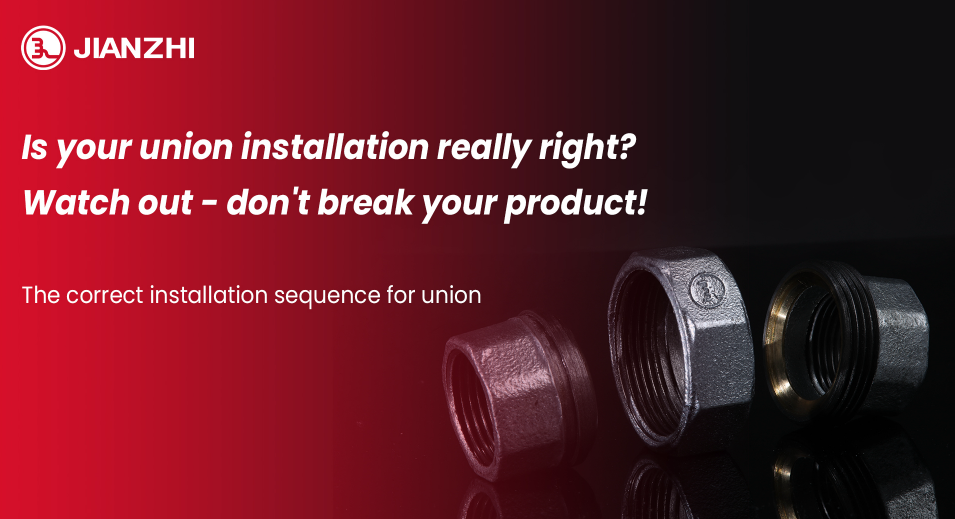
The global market in 2026 no longer accepts "general-purpose" fittings for mission-critical applications. Whether it is a fire protection loop in a skyscraper or a municipal water mainline, the specific type of pipe union fitting chosen can determine the system's resilience against pressure surges and environmental corrosion. At our pipe fitting factory, we have spent 44 years (since 1982) perfecting the metallurgy of the malleable iron pipe fitting. By focusing our 4,000-strong workforce exclusively on "small but refined" product lines—specifically malleable iron and grooved pipe fittings—we provide the technical depth that broad-spectrum manufacturers simply cannot match.
One of the most significant changes in 2026 engineering specifications is the move toward higher pressure baselines. Historically, 1.6 MPa was sufficient for many commercial projects. However, modern infrastructure now demands a 2.5 MPa (363 psi) standard to account for the increased height of buildings and the intensity of industrial processes. Every union we produce is engineered to meet these rigorous benchmarks, ensuring that your waterworks infrastructure is built on a foundation of FM/UL certified reliability.
Understanding the types of unions available also requires understanding where they come from. In the current geopolitical climate, supply chain resilience is paramount. By operating strategic production bases in both China and Romania, our group offers a unique "Dual-Base" advantage. This allows global distributors to source high-quality ductile iron and malleable iron unions while optimizing for logistics and bypassing anti-dumping duties. Whether you are looking for a threaded conical seat union from our high-volume China facility or an EU-origin component from our Romania plant, our 44-year legacy ensures that every fitting meets the same world-class standard of excellence.
In the 2026 piping industry, the most critical internal feature of a pipe union fitting is its seat design. This is the interface where the leak-proof seal is formed, and choosing between a conical or flat seat determines how your waterworks infrastructure will perform under long-term stress. At our pipe fitting factory, we focus on high-precision machining to ensure these surfaces meet the most rigorous global standards.
The conical seat union is widely considered the gold standard for high-performance mechanical systems. By machining the male and female ends into a precise, matching taper, we create a "metal-to-metal" seal that requires no rubber gasket or O-ring. This is vital for 2026 industrial applications and fire protection networks where gaskets might perish, harden, or leak over time due to heat or chemical exposure. Our 44 years of experience have allowed us to perfect this taper, ensuring that every malleable iron pipe fitting we produce can maintain a "Zero-Leak" seal even at 2.5 MPa standards.
While the conical design is superior for high-pressure durability, the flat seat union—which utilizes a gasket to create a seal—remains a choice for specific low-pressure applications or systems where a specific gasket material (like EPDM or PTFE) is required for chemical compatibility. However, for 2026 projects prioritizing longevity and vibration resistance, the gasket-free conical design is the preferred engineering choice.
A conical seat is only effective if the machining is flawless. Our factory utilizes state-of-the-art DISA production lines and automated CNC finishing to ensure that the mating surfaces are perfectly concentric. Whether sourced from our China or Romania production bases, every FM/UL certified union is 100% air-pressure tested. With over 4,000 employees dedicated to quality control, we ensure that the seat design of your union isn't just a technical spec, but a guarantee of infrastructure integrity.
In the 2026 global market, the material of a pipe union fitting is the most critical factor in determining its maximum operating pressure and environmental resilience. While the external appearance of various fittings might look similar to the untrained eye, the internal metallurgy defines the performance boundaries for high-stakes waterworks infrastructure. At our pipe fitting factory, we leverage 44 years of experience (since 1982) to produce the two primary materials used in modern mechanical systems: Malleable Iron and Ductile Iron.
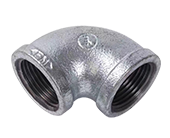
A malleable iron pipe fitting is the industry standard for commercial plumbing, HVAC systems, and gas lines. The secret to its reliability lies in the annealing process. By heating white cast iron for extended periods, we transform brittle carbon into "temper carbon" nodules, giving the material its namesake malleability. Our factory has spent over four decades refining this thermal treatment to ensure our unions offer superior impact resistance and threadability. For fire protection networks and residential water systems, our malleable unions provide the perfect balance of cost-efficiency and durability, meeting the 2.5 MPa standards required for modern high-density urban projects.
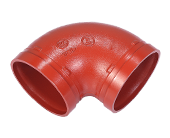
As 2026 infrastructure projects grow in scale and complexity, the ductile iron union has become the go-to solution for high-vibration and seismic-prone environments. Unlike malleable iron, ductile iron contains spherical (nodular) graphite, which provides significantly higher tensile strength and yield strength. This makes it the ideal choice for massive industrial mainlines and municipal waterworks infrastructure where the system must withstand extreme mechanical stress. When a project demands the highest level of structural integrity, our ductile iron unions deliver the rugged performance needed to prevent catastrophic failures.
Regardless of the material chosen, consistency is the hallmark of our manufacturing process. With over 4,000 employees and state-of-the-art DISA automated lines, we ensure that every pipe union fitting—whether malleable or ductile—is FM/UL certified. This global certification is a testament to our rigorous testing protocols, ensuring that every piece can handle the 2026 baseline of 2.5 MPa (363 psi) with a substantial safety margin.
By maintaining strategic production bases in both China and Romania, we offer these high-grade materials with the added benefit of a duty-optimized supply chain. Whether you require the classic resilience of a malleable iron pipe fitting or the advanced strength of ductile iron, our dual-base strategy ensures that your procurement remains reliable, compliant, and cost-effective on a global scale.
In the realm of high-performance malleable iron pipe fitting systems, the configuration of the connection ends is a vital technical specification that dictates how a pipe union fitting integrates into the broader network. For 2026 waterworks infrastructure projects, engineers must choose between Female-to-Female (FF) unions and Male-to-Female (MF) unions—often referred to as "Union Elbows" or "Male/Female Unions." At our pipe fitting factory, we leverage 44 years of experience (since 1982) to ensure that both configurations provide the same level of structural integrity and leak protection.
The most common type of pipe union fitting used in global distribution is the Female-to-Female variety. This design features internal threads on both ends, allowing it to join two sections of male-threaded pipe. It is the standard solution for repair sections and equipment loops in commercial HVAC and gas delivery systems. By utilizing our automated DISA production lines, we ensure that the internal threading is perfectly concentric, allowing for a smooth, high-torque assembly that meets the 2.5 MPa standards required for the most demanding 2026 industrial environments.
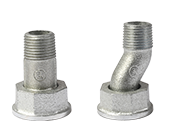
Alternatively, the Male-to-Female union—sometimes called a "Street Union"—features an external thread on one end and an internal thread on the other. This type is a strategic choice for tight mechanical spaces where a union must be connected directly into a valve or a manifold without the need for an additional pipe nipple. This reduction in the number of joints is a key engineering trend in 2026, as fewer joints equate to fewer potential leak points in waterworks infrastructure.
A critical aspect of our manufacturing excellence is our ability to provide precision threading for both American (NPT) and British/International (BSPT) standards. Because a union relies on the mechanical pull of its nut to create a "metal-to-metal" seal, the quality of these threads is paramount. Every malleable iron pipe fitting produced in our facilities undergoes rigorous CNC machining to ensure a perfect fit every time. This precision is why our products remain FM/UL certified, providing a verified safety margin for fire protection and high-pressure fluid transport.
Whether your project requires FF or MF configurations, our China and Romania production bases provide a stable, high-volume supply of 2.5 MPa rated components. With over 4,000 employees and a commitment to "small but refined" production, we ensure that our unions are the most reliable link in your system. By sourcing from a manufacturer with nearly half a century of expertise, you gain a partner that understands the nuances of thread geometry and metallurgical durability required for 2026’s infrastructure challenges.
In the complex engineering landscape of 2026, a standard pipe union fitting is not always sufficient for every environment. Specialized applications—ranging from mixed-metal plumbing to high-risk fire suppression—demand variations in design and finish to ensure long-term system stability. At our pipe fitting factory, we leverage 44 years of experience to produce specialty malleable iron pipe fitting solutions that address these niche but critical infrastructure needs.
One of the most essential specialty types is the dielectric union. As modern waterworks infrastructure increasingly utilizes a mix of materials—such as connecting copper tubing to galvanized iron mains—the risk of galvanic corrosion becomes a major concern. A dielectric union utilizes a specialized non-conductive polymer gasket and sleeve to break the electrical current between dissimilar metals. This simple intervention prevents the electrochemical reaction that would otherwise lead to premature pipe failure and costly leaks. Our factory ensures that these specialty components maintain the same 2.5 MPa standards as our standard unions, providing protection and pressure resistance in one package.
For fire protection networks, the "specialty" lies in the certification. A union used in a fire sprinkler system must be FM/UL certified, signifying it can withstand intense heat and extreme pressure spikes during an emergency. In 2026, building codes are stricter than ever. Using a non-certified pipe union fitting in a fire line is not just a technical risk; it is a legal liability. Because we focus on a "small but refined" product range, we have the resources to ensure every fire-grade union we produce—whether from our China or Romania production bases—meets these elite global safety benchmarks.
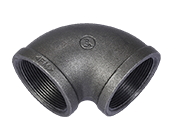
The "type" of union is often defined by its finish. Black malleable iron unions are the go-to specialty for oil and gas lines where moisture is minimal. However, for potable water and high-humidity environments, we provide ASTM A153 hot-dip galvanized unions. Our galvanizing process involves a deep metallurgical bond that protects the threads and the seating surface from oxidation. This ensures that the union remains "serviceable"—meaning it can actually be unscrewed ten years after installation.
With over 4,000 employees and a legacy dating back to 1982, our group provides the specialty expertise required to navigate these choices. By choosing the right specialty union, you are not just connecting pipes; you are future-proofing your infrastructure against corrosion, pressure, and regulatory scrutiny.
In the volatile global trade environment of 2026, the decision of where to source a pipe union fitting is as much a financial strategy as it is an engineering one. For international distributors and large-scale contractors managing waterworks infrastructure, the "total landed cost" of a malleable iron pipe fitting is often dictated by geopolitical factors, specifically anti-dumping duties and fluctuating freight rates. This is where our group’s unique "Dual-Base" manufacturing model provides a definitive competitive edge that most regional factories simply cannot match.
For our partners in Europe, North America, and certain South American markets, anti-dumping duties on Asian-origin iron products can significantly inflate project budgets. By operating a fully integrated production base in Romania, we offer a powerful solution. Our Romanian facility produces FM/UL certified unions that carry EU-origin status, allowing buyers to legally and ethically bypass the heavy tariffs associated with Chinese exports. In 2026, this strategic geographic positioning ensures that your high-pressure 2.5 MPa standards components remain price-competitive without sacrificing a single ounce of metallurgical quality.
While our Romanian plant offers a strategic gateway to the West, our high-volume China production bases remain the heartbeat of our global manufacturing scale. With over 4,000 employees and a history dating back to 1982, we have spent 44 years of experience perfecting the automated DISA casting process. This massive scale allows us to maintain a deep inventory of every conceivable pipe union fitting type, ensuring that even the largest national infrastructure overhauls are supplied on time. Our Tianjin-based trade office acts as the central coordination hub, ensuring that whether your shipment originates in Europe or Asia, the documentation and quality control are flawless.
The hallmark of a world-class pipe fitting factory is consistency. A malleable iron pipe fitting sourced from our Romania facility is identical in metallurgical integrity, thread precision, and pressure rating to one sourced from our China facility. Every union is subjected to the same 100% air pressure testing and meets the same 2.5 MPa standards. This unified quality shield means that global engineering firms can specify our products in their 2026 blueprints with total confidence, knowing that the supply chain is resilient, the origin is optimized for their local tax laws, and the performance is backed by nearly half a century of manufacturing excellence. By partnering with us, you aren't just buying hardware; you are investing in a global logistical framework designed to protect your project's bottom line.
In the high-stakes world of waterworks infrastructure, the smallest component often carries the greatest responsibility. As we have detailed, selecting the correct pipe union fitting is not merely a matter of connecting two ends; it is about ensuring that a multi-million dollar system remains maintainable, safe, and efficient for decades to come. Whether you are specifying a conical seat for a high-vibration industrial line or a galvanized union for a municipal water project, the integrity of that joint is the final line of defense against system failure. In 2026, where the 2.5 MPa standards have become the benchmark for quality, there is no room for compromise in metallurgical precision.
At our pipe fitting factory, we have spent 44 years (since 1982) focusing on a "small but refined" strategy. By specializing almost exclusively in the malleable iron pipe fitting, we have achieved a level of mastery that broader manufacturers cannot replicate. With over 4,000 employees and state-of-the-art DISA automated production lines, we don't just "make" unions; we engineer them for high-performance service. This focus is why our products carry the FM/UL certification, providing a globally recognized seal of approval that your infrastructure is built to survive the most extreme operational demands.
Choosing a supplier in 2026 requires more than just looking at a catalog. It requires a partner with the logistical foresight to navigate a complex global trade landscape. Our dual-base production strategy in China and Romania is designed specifically to protect your supply chain from anti-dumping duties and geopolitical volatility. This "Global Shield" ensures that you receive factory-direct pricing and consistent, high-pressure-rated components, regardless of where your project is located.
As you plan your next 2026 milestone—be it a massive fire suppression system or a national water network—trust the expertise that only half a century of experience can provide. Build with the confidence that every union is a "Zero-Leak" promise from our family to yours. Contact our Tianjin trade office today to discover how our certified malleable iron solutions can elevate your project's performance and protect your bottom line.
SAFER
PRODUCT INFO
ABOUT JIANZHI
TECH DATA
Contact Us
E-mail: sales1@jianzhi-fitting.com
Tel: +86 15822792427
Office In Tianjin:
Heping District, Tianjin, China.
Production Base 1:
Chifeng, Inner Mongolia, China.
Production Base 2:
Tangshan City, Hebei Province, China.
Production Base 3:
Schelei Street,Baicoi City,Prahova County,Romania