Aug. 31, 2026
China produces the world's largest volume of malleable iron pipe fittings — but not every factory is worth your PO. The difference between a profitable import and a rejected container comes down to three gates: certification, MOQ, and logistics. This guide walks importers through what to verify before you pay a deposit.
Planning a first order? Send an inquiry — Jianzhi's export team confirms certification coverage for your market, MOQ terms, and FCL/LCL logistics before you commit.
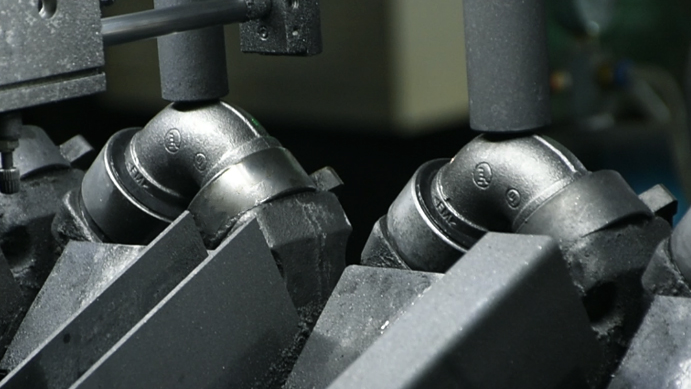
Sourcing malleable iron fittings from China is standard strategy for distributors in North America, Southeast Asia, the Middle East, and Latin America — the material is proven, the scale unmatched, and the landed cost beats most local sourcing.
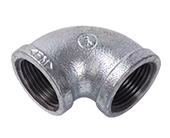
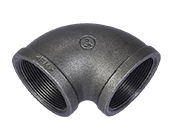
The industry's real risk is not price. It is buying uncertified stock from a trading company that cannot produce an MTR, a certificate file number, or a batch record. Before selecting a supplier, importers should understand the full range of malleable iron pipe fittings and the standards required for their destination market.
This guide is built around the three gates that separate a factory partner from a gamble:
• Certification — does the factory hold the marks your market's authorities require?
• MOQ — can the order structure fit your cash flow and container planning?
• Logistics — can the supplier move FCL and LCL cargo reliably to your port?
Before talking price, lock the specification. Every supplier can show a sample; the spec sheet proves the production standard.
| Parameter | Specification |
|---|---|
| Standard | EN10242 / ISO 49 |
| Thread Types | BSPT (ISO 7-1), NPT (ASME B1.20.1) |
| Material | Malleable iron, annealed |
| Pressure Rating | 2.5 MPa (25 bar) |
| Tensile Strength | ≥350 MPa |
| Elongation | ≥10% |
| Finishes | Black, Hot-Dip Galvanized |
| Certifications | FM, UL, ABNT, SIRIM, ISO, and CUL certified |
| Testing | 100% air leak test per fitting |
| Sizes | Full range: elbows, tees, crosses, unions, couplings, caps, plugs, nipples |
Three lines deserve attention: the standard (EN10242 / ISO 49), the thread type (BSPT or NPT) for your market, and the testing clause — 100% individual air leak testing signals factory quality; random sampling does not.
For international buyers sourcing threaded fittings, thread compatibility should also be confirmed before placing an order. See our detailed BSPT vs NPT thread guide to understand the differences between the two standards and avoid costly thread mismatches.
The certification you need is defined by your destination market — not by what the supplier chooses to advertise.
• US & Global fire protection: FM Approved and UL Listed — verify file numbers in the official directories.
• Canada: CUL listing, adapting US test results to Canadian recognition.
• Brazil: ABNT compliance for tensile and elongation requirements.
• Malaysia / ASEAN: SIRIM approval for imported piping products.
• Everywhere: ISO 9001 quality management and EN10242 / ISO 49 dimensional compliance.
Ask for certificate file numbers, not a photo of a framed certificate — then verify each in the authority's database. A factory holding FM, UL, ABNT, SIRIM, ISO, and CUL across one line has survived multiple independent audits: the strongest paper evidence short of a site visit.
Before placing an order, buyers should also understand how to verify certification claims rather than relying only on supplier-provided PDFs. Review Jianzhi's malleable iron fitting certifications as part of your supplier qualification process.
Three steps: (1) collect file numbers with the supplier's legal invoice name, (2) search each in the official registry (FM Approvals Guide, UL Product iQ), (3) confirm the certificate's company name matches your contract's entity. Fail any step — walk away.
For projects involving threaded fittings in multiple regions, buyers should also verify whether the supplier can manufacture both BSPT and NPT connections. Our BSPT vs NPT comparison guide explains how regional thread standards affect purchasing decisions.
Factory MOQs depend on the supplier's model:
• Trading companies advertise low MOQs — but add middleman margins and hold no quality accountability.
• Certified factories structure orders by container: full container (FCL) of mixed sizes, or less-than-container (LCL) for first orders and reorders.
• Mixed-container orders are standard — most suppliers load a container with your full size spread, building your first stock book economically.
For a first order, an LCL mixed load is the sensible entry: test the factory on 5–10 sizes, verify quality in hand, then scale to FCL programs. Ask for the MOQ matrix per size and the FCL/LCL price difference — a transparent answer is a good sign; a vague one is not.
Building your first container? Send an inquiry for Jianzhi's mixed-container program — confirmed MOQ per size, FCL/LCL pricing, and a loading plan built around your stock priorities.
Compliance is a document chain — every link must be verifiable:
• Material Test Report (MTR) — melt chemistry proving the batch meets the material grade.
• Batch inspection records — in-house QC and third-party inspection results for your batch.
• Certificate pack — FM, UL, ABNT, SIRIM, CUL file numbers with the supplier's registered name.
• Factory audit — for volume programs, visit or arrange third-party audit of the foundry, annealing, and thread-cutting lines.
If a supplier cannot produce these four in writing, the sample is marketing and the paperwork is the product. Certified factories keep this file ready — it is part of every serious quotation.
Importers should also compare certification requirements with the technical standards required for the fitting itself. This is particularly important for fire protection, gas, water, and industrial piping applications where regional codes may specify different approval requirements.
Jianzhi is built to close all three gates in one supplier relationship.
• Certification depth: FM, UL, ABNT, SIRIM, ISO, and CUL certified — one file covers US, Canadian, Brazilian, and ASEAN requirements.
• 44+ years of production experience: manufacturing malleable iron fittings since 1982 — process maturity behind every batch.
• 400,000 m² manufacturing facility: China's largest cast iron pipe fitting factory, with capacity to hold program stock.
• Dual-thread flexibility: BSPT and NPT on the same line, serving European and American-standard markets.
• 100% air leak testing: every pressurized fitting individually tested before packing.
• Logistics coordination: export team managing FCL and LCL shipments with full documentation for smooth customs clearance.
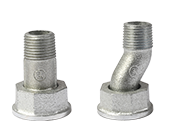
For distributors sourcing multiple product categories, consolidating orders through one manufacturer can also simplify quality documentation and technical specifications across elbows, tees, couplings, unions, caps, plugs, and other malleable iron pipe fittings.
For a distributor: one vendor file, one compliance pack, one quality standard across your whole fitting range.
Run these checks before you send a deposit:
1. Spec locked: EN10242 / ISO 49, thread type per market, sizes and quantities on paper.
2. Certifications verified: FM/UL/CUL, ABNT, SIRIM file numbers checked in official databases.
3. MOQ structured: LCL mixed load first, FCL program for scale.
4. Logistics planned: port, Incoterm, and documentation confirmed.
5. Paperwork obtained: MTRs, batch records, and certificate pack before shipment.
China's fitting industry offers the world's best scale economics — the winners pair that scale with verified certification and factory-direct supply.
Before confirming threaded product specifications, make sure your destination market requires BSPT or NPT. Read our BSPT vs NPT thread comparison to avoid ordering fittings with incompatible thread standards.
For Wholesalers & Distributors — Send an inquiry for the Jianzhi volume price sheet, MOQ matrix, and mixed-container (FCL/LCL) program terms.
For EPC Contractors & Specifiers — Send an inquiry for MTRs, FM/UL/ABNT/SIRIM certificate packs, and EN10242 compliance documentation for your submittal package.
To help our team respond faster, include in your inquiry: target market, thread standard, and estimated annual volume.
SAFER
PRODUCT INFO
ABOUT JIANZHI
TECH DATA
Contact Us
E-mail: sales1@jianzhi-fitting.com
Tel: +86 15822792427
Office In Tianjin:
Heping District, Tianjin, China.
Production Base 1:
Chifeng, Inner Mongolia, China.
Production Base 2:
Tangshan City, Hebei Province, China.
Production Base 3:
Schelei Street,Baicoi City,Prahova County,Romania