Mar. 27, 2026
As the global waterworks infrastructure sector advances through 2026, the market for galvanized pipe fittings has entered a period of "structural scarcity." This article deconstructs the paradox facing modern waterworks distributors: a marketplace where raw zinc is in surplus, yet high-specification, FM/UL certified fittings face unprecedented lead times. We analyze the convergence of three disruptive forces—the full-scale implementation of the Carbon Border Adjustment Mechanism (CBAM), the global shift toward 2.5 MPa high-pressure standards for fire safety, and the "crowding out" effect caused by the renewable energy infrastructure boom. By examining the decoupling of raw material costs from finished product pricing and the impact of geopolitical fragmentation on trade routes, this paper provides a strategic roadmap. It argues that supply chain resilience in 2026 is no longer defined by the lowest unit cost, but by a distributor’s ability to secure traceable, compliant, and "green-certified" malleable iron inventory.
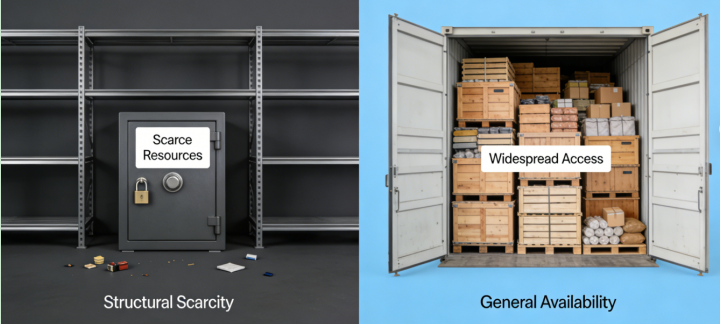
Structural Scarcity is the New Normal: General inventory may be available, but a critical shortage exists for ASTM A153 compliant and high-pressure rated fittings required for municipal and industrial projects.
The "Green Barrier" is Real: CBAM compliance and Environmental Product Declarations (EPDs) are now mandatory for market access, with "Green Foundries" commanding a 15–20% price premium.
Decoupled Costs: Despite a global zinc surplus, galvanized pipe fittings remain expensive due to rising energy surcharges and a shortage of low-impurity pig iron.
Cross-Sector Competition: Fire safety retrofitting and solar/wind infrastructure are cannibalizing foundry capacity, extending lead times to 16–24 weeks for standard waterworks SKUs.
Digital Traceability as a Asset: Waterworks distributors must prioritize suppliers offering "Digital Twin" or blockchain-verified batch tracking to mitigate liability and meet 2026 transparency standards.
Strategic Pivot: Success requires moving from "Just-in-Time" to a "Core + Satellite" sourcing model, blending high-volume Asian production with agile, near-shore suppliers.
As we move through the second quarter of 2026, the global market for galvanized pipe fittings presents a baffling contradiction. To the casual observer, global production volumes suggest a market in equilibrium. However, for the seasoned waterworks distributor, the reality on the ground is far more precarious. We are currently witnessing "The 2026 Paradox": a marketplace where warehouses are physically full, yet the specific, high-performance fittings required for modern waterworks infrastructure are increasingly difficult to procure.
In previous decades, a shortage meant a literal absence of product. In 2026, the shortage is "structural." This means that while there is an oversupply of generic, unbranded malleable iron fittings suitable for low-pressure residential plumbing, there is a severe deficit of hot-dip galvanized (HDG) fittings that meet the rigorous ASTM A153 or EN 10242 standards.
For distributors, this creates a dangerous illusion of security. Carrying 50,000 units of standard elbows is of little use when a municipal contract specifically mandates FM/UL certified galvanized fittings with traceable heat numbers. The "shortage" is not about quantity; it is about compliance and quality. As infrastructure projects become more regulated to prevent lead leaching and ensure seismic resilience, the pool of qualified manufacturers has shrunk, creating a bottleneck that generic suppliers cannot fill.
The "Just-in-Time" (JIT) inventory model, which dominated the early 2020s, has officially become a liability in 2026. Waterworks distributors who relied on rapid-cycle reordering are now facing a fragmented supply chain. The lead times for high-pressure, large-diameter galvanized tees and crosses have ballooned from a standard 4 weeks to upwards of 20 weeks in certain regions.
This delay is driven by a "Flight to Quality." Major contractors and utility providers are no longer willing to risk project delays on unverified imports. They are crowding into the order books of a select few Tier-1 foundries known for their supply chain resilience and rigorous testing protocols. Consequently, these top-tier manufacturers are operating at 95% capacity, leaving little room for spot-market orders or emergency replenishment.
For a distributor to remain competitive in 2026, inventory velocity must be balanced with strategic depth. The paradox lies in the fact that while the cost of carrying inventory has risen due to higher interest rates, the cost of not having the right fitting is even higher—often resulting in the loss of long-term municipal service agreements.
We are seeing a shift toward "Just-in-Case" (JIC) strategies for critical SKUs. Distributors are now categorizing their galvanized pipe fittings into "Commodity" and "Strategic" assets. While commodity items are sourced based on price, strategic assets—such as heavy-duty fire protection fittings and lead-free galvanized components—are being stockpiled as a hedge against the ongoing structural volatility. In 2026, the most successful distributors are those who recognize that availability is the new currency, and certified quality is the only true shield against a "shortage" that is hidden in plain sight.
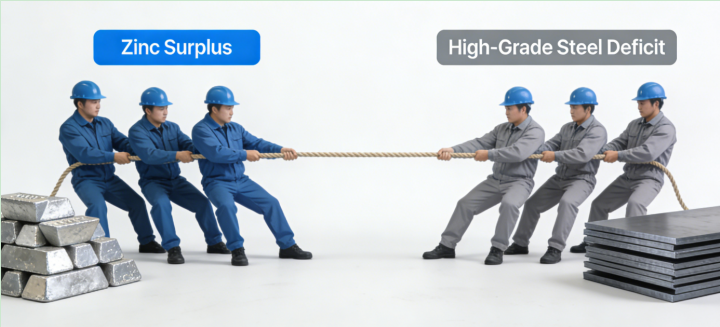
In 2026, the economic narrative surrounding galvanized pipe fittings is defined by a sharp divergence between raw commodity prices and the final cost of manufactured goods. For waterworks distributors, understanding this "Raw Material Tug-of-War" is essential for predicting price fluctuations and identifying potential supply bottlenecks before they impact the bottom line.
On the surface, the global zinc market appears to be in a position of strength. Analysts report a global surplus of approximately 270,000 tons in 2026. Under traditional economic theory, an oversupply of the primary coating material should lead to a reduction in the price of hot-dip galvanized (HDG) products. However, this is a "Zinc Mirage."
The reality is that while raw zinc ingots are plentiful, the smelting and alloying capacity remains highly concentrated. Environmental regulations in key smelting hubs have limited the output of high-purity zinc alloys specifically formulated for the ASTM A153 galvanizing process. Furthermore, the "LME (London Metal Exchange) cash price" is increasingly decoupled from the "physical delivery premium." Distributors are finding that while the base metal is cheap, the conversion cost to apply that metal to a malleable iron fitting has risen by 15% due to specialized labor and chemical treatment costs.
The most critical constraint in 2026 is not zinc, but the base metal: malleable iron. Producing high-pressure fittings (2.5 MPa) requires a specific grade of pig iron and high-quality steel scrap with extremely low levels of phosphorus and sulfur.
As the global steel industry shifts toward Electric Arc Furnaces (EAF) to meet carbon reduction goals, the availability of "prime" scrap is tightening. Most recycled steel in 2026 contains trace contaminants that weaken the crystalline structure of malleable iron pipe fittings, making them prone to cracking under high-pressure water hammer effects. Consequently, foundries that produce FM/UL certified fittings are competing for a shrinking pool of high-purity iron ore. This competition has created a "bidding war" for raw materials, ensuring that even if zinc prices drop, the structural cost of the fitting remains elevated.
Finally, the hot-dip galvanizing process itself is a massive consumer of energy. In 2026, many global foundries have transitioned to "carbon-indexed energy pricing," where the cost of natural gas or electricity is tied to regional carbon emission credits.
When energy prices spike—often due to seasonal demand or geopolitical shifts—foundries pass these costs directly to the waterworks distributor via "Energy Surcharges." This makes the cost of galvanized pipe fittings highly sensitive to energy volatility, regardless of how much zinc is sitting in a warehouse. For distributors, this means that supply chain resilience in 2026 depends less on tracking metal tickers and more on monitoring the energy stability of their manufacturing partners.
As of 2026, the global trade of galvanized pipe fittings is no longer dictated solely by price and quality; it is now governed by carbon footprints. The full-scale implementation of the Carbon Border Adjustment Mechanism (CBAM) has fundamentally altered the sourcing strategies for every major waterworks distributor. This "Green Barrier" has transformed environmental compliance from a corporate social responsibility (CSR) goal into a mandatory survival metric.
For waterworks distributors importing malleable iron fittings into regulated markets, the "Carbon Tax" is the most significant line-item increase of the decade. CBAM requires importers to report the embedded emissions of their steel and iron products. In 2026, if a foundry in a non-regulated region cannot provide verified Environmental Product Declarations (EPDs), the distributor is hit with heavy financial penalties at the border.
This has led to a dramatic "Supply Chain Realignment." Distributors are fleeing "high-carbon" suppliers in favor of foundries that have invested in Electric Arc Furnaces (EAF) or carbon-capture technologies. Consequently, the demand for CBAM-compliant galvanized fittings has far outstripped supply, creating a premium tier of inventory that is often pre-sold months before it even reaches a port.
The year 2026 has seen a "Great Shake-up" among global foundries. Hundreds of legacy manufacturing sites—those still relying on coal-fired cupola furnaces for melting malleable iron—have been forced to shutter. These closures, driven by both local environmental crackdowns and a lack of international buyers, have removed approximately 15% of global production capacity for standard galvanized pipe fittings.
For the waterworks distributor, this means the era of "limitless supply" is over. The remaining "Green Foundries" are operating at peak capacity, leading to a "Tiered Access" system. Distributors with long-standing relationships and high-volume commitments are prioritized, while smaller players are left to fight over the dwindling output of aging, non-compliant plants that face constant risk of regulatory shutdown.
We are witnessing a clear bifurcation in the 2026 market. On one side are "Certified Green" galvanized fittings that command a 15% to 20% price premium but guarantee access to municipal and government-funded waterworks infrastructure projects. On the other side are "Grey Market" fittings with high carbon intensities that are increasingly restricted to private, low-stakes residential repairs.
In 2026, supply chain resilience is synonymous with "Green Resilience." A distributor’s ability to provide documentation proving that their hot-dip galvanized (HDG) fittings were produced using sustainable energy is now just as important as the thread quality or the pressure rating. As we move further into the year, the "Green Barrier" will continue to tighten, making CBAM compliance the ultimate gatekeeper of the global pipe fitting trade.
In 2026, the waterworks distributor is no longer just competing with other plumbing wholesalers; they are in a bidding war against the global energy and safety sectors. The supply of malleable iron pipe fittings is being "cannibalized" by three primary demand surges that have reached a boiling point this year.
The most immediate pressure comes from the global tightening of fire safety codes for high-density urban developments. In 2026, a series of international building mandate updates has triggered a "Retrofitting Super-Cycle." Building owners are now required to upgrade aging fire suppression systems to 2.5 MPa high-pressure standards.
Because these systems rely exclusively on FM/UL certified galvanized fittings for their corrosion resistance and structural integrity, the demand for 1-inch to 4-inch tees, elbows, and couplings has skyrocketed by 25% year-over-year. For a waterworks distributor, this means that the same factory lines producing their municipal water fittings are being diverted to fulfill massive, high-priority fire safety contracts, often leaving standard waterworks orders in the "backlog" for months.
A less obvious but equally potent disruptor is the global "Green Infrastructure" boom. In 2026, the massive expansion of utility-scale solar farms and offshore wind projects has created an insatiable appetite for hot-dip galvanized (HDG) components.
While a solar mounting bracket is not a "pipe fitting," it uses the exact same zinc bath capacity and HDG processing time at the foundry level. Many of the world’s largest malleable iron foundries have converted portions of their finishing lines to handle high-volume renewable energy components, which offer more predictable, long-term margins than the volatile waterworks infrastructure market. This "crowding out" effect has reduced the available "dip-time" for traditional pipe fittings, creating an artificial bottleneck in the final stage of production.
Finally, government-led "Smart Water" initiatives in North America and Europe have moved from the planning phase to full-scale execution in 2026. These projects involve the wholesale replacement of lead-contaminated or failing iron pipes with high-durability, lead-free galvanized systems.
These municipal projects are "Inflexible Demand"—they cannot be delayed, and they require strict adherence to ASTM A153 standards. When a billion-dollar government project enters the market, they often "reserve" the entire output of a Tier-1 manufacturer for an entire quarter. For the independent waterworks distributor, this results in sudden "Zero-Stock" notifications for essential SKUs, as the factory’s entire inventory is diverted to state-level infrastructure. In 2026, the "shortage" is often simply a matter of who has the largest contract—and usually, it isn't the local distributor.
In 2026, the global trade of galvanized pipe fittings has moved away from a unified global market toward a fragmented landscape of "Price Islands." For the waterworks distributor, the cost of a fitting is now determined less by the factory-gate price and more by the specific geopolitical coordinates of the port where it lands.
As of early 2026, we are witnessing a radical divergence in regional pricing. While a malleable iron pipe fitting may remain price-stable in Southeast Asian hubs, that same fitting is seeing a 30% to 50% premium in North America and the EU. This is driven by high-stakes trade barriers, including the continuation of definitive anti-dumping duties on Chinese malleable cast iron fittings, which were extended in late 2025 and mid-2026.
Additionally, the introduction of a 10% global import surcharge in the U.S. in February 2026—initially a temporary 150-day measure—has created a "policy cliffhanger" for distributors. These shifting tariffs mean that supply chain resilience now requires a sophisticated tax-mitigation strategy, such as utilizing Foreign Trade Zones (FTZs) or "First Sale for Export" programs to lower the dutiable value of critical waterworks infrastructure components.
The logistical map of 2026 remains haunted by the persistent instability in the Middle East. Shipping lines have largely abandoned the Suez Canal in favor of the Cape of Good Hope, a detour that adds nearly 3,500 nautical miles and two weeks to every voyage from Asian foundries to European and East Coast ports.
For the distributor, this isn't just a delay; it is a financial drain. In March 2026, freight rates have stabilized at levels 25% above pre-crisis benchmarks, but with new "War Risk Premiums" and "Carbon-ETS Surcharges" added on top. These "logistical micro-failures"—missed connections and port congestion in overcrowded Mediterranean hubs—mean that lead times for galvanized inventory have become a moving target, forcing distributors to carry significantly more "buffer stock" than they did five years ago.
To bypass these geopolitical "chokepoints," 2026 has seen an aggressive pivot toward ASEAN manufacturing. Vietnam, Thailand, and Indonesia have emerged as the new "Foundry Frontier," attracting massive foreign direct investment to build high-tech, automated lines for iron or steel tube fittings.
However, this transition comes with its own set of challenges. While Southeast Asian production helps avoid some specific tariffs, these regions are still scaling up their FM/UL certification capabilities. For a waterworks distributor, the strategic play in 2026 is no longer about finding the absolute "lowest unit cost" but about building a diversified supplier matrix that can pivot between regional hubs as geopolitical winds shift. In this fragmented world, the most successful distributors are those who trade in "certainty" rather than just "commodity."
In 2026, the global market has lost its appetite for "generic" galvanized pipe fittings. As municipal codes tighten and liability insurance premiums for contractors reach record highs, the "shortage" is felt most acutely in the specialized category of FM/UL certified fittings. This shift marks the transition of the fitting from a simple commodity to a highly engineered, regulated component.
A major driver of this choke point is the global synchronization of fire safety and high-pressure water transmission standards. In 2026, the transition to 2.5 MPa (363 psi) rated systems for high-rise urban infrastructure has become the baseline. Foundries capable of producing malleable iron fittings that can withstand these pressures while maintaining FM Approvals are seeing their order books filled 18 months in advance.
Distributors who fail to secure these certified lines are finding themselves with "dead stock"—thousands of tons of standard 1.6 MPa fittings that no longer meet the revised building codes of 2026. This has created a "phantom inventory" problem, where the industry appears to have plenty of fittings, but almost none that are legally installable in new Tier-1 construction projects.
The year 2026 also marks the widespread adoption of item-level traceability. Driven by the need to manage "Scope 3" emissions and ensure structural accountability, major waterworks infrastructure projects now frequently require a "digital twin" for every critical joint.
Leading manufacturers are now laser-etching unique QR codes onto each galvanized pipe fitting, linking it to a blockchain-verified Mill Certification that details the exact heat number, zinc purity, and carbon intensity. For the waterworks distributor, this means that "untraceable" bulk imports are increasingly viewed as a liability risk. The shortage is thus compounded by a "Quality Cull," where older, non-traceable inventory is being liquidated at a loss while premium, digitally-enabled stock commands a record-breaking 8% to 12% "Certification Premium."
Perhaps the most dangerous trend in late 2026 is the influx of "sub-standard substitutes" designed to look like certified products. With lead times for genuine ASTM A153 galvanized fittings stretching into the next year, some fringe suppliers are flooding the market with fittings that use inferior electro-galvanizing or non-malleable cast iron.
Distributors must be more vigilant than ever. A single failure of a non-spec fitting in a 2026 high-pressure fire line can result in multi-million dollar "Total Loss" claims. In this environment, supply chain resilience isn't just about having stock—it’s about having the validated stock that keeps the project, and the distributor’s reputation, from failing under pressure.
As we navigate the complexities of 2026, the traditional playbook for waterworks distributors has been rendered obsolete. The "New Normal" demands a sophisticated approach to supply chain resilience, moving beyond simple price-per-unit metrics to a model that values availability and compliance above all else.
The volatility of the 2026 market has proven that "Just-in-Time" procurement is a relic of a more stable era. Successful distributors are now adopting a Just-in-Case (JIC) strategy for high-velocity, FM/UL certified galvanized fittings.
By identifying "Mission-Critical SKUs"—specifically 1-inch to 4-inch malleable iron tees, elbows, and 2.5 MPa rated couplings—distributors are building 6-month buffer stocks. While this increases carrying costs, it serves as a powerful hedge against the sudden "lead-time spikes" seen in the first half of 2026. In a market where a missing $5 fitting can stall a $50 million waterworks infrastructure project, having physical inventory is the ultimate competitive advantage.
Relying on a single manufacturing hub is no longer viable. In 2026, the most resilient distributors utilize a "Core + Satellite" sourcing model:
The Core: Long-term, high-volume contracts with Tier-1 foundries (likely in the ASEAN region or India) that provide CBAM-compliant, high-quality output.
The Satellite: Secondary relationships with regional or "near-shore" manufacturers (such as those in Mexico, Turkey, or Eastern Europe). While their unit costs may be higher, their proximity allows for rapid 2-week replenishment when global shipping lanes face disruption.
The winners in 2026 are those using data to "see around corners." By integrating AI-driven predictive tools, distributors can analyze regional construction permits, municipal budget cycles, and zinc market fluctuations to anticipate demand spikes before they hit the spot market.
Furthermore, a rigorous Supplier Audit Checklist is now mandatory. Before onboarding a new partner to fill a shortage gap, distributors must verify:
ASTM A153 Compliance: Not just a certificate, but a third-party lab verification of zinc coating thickness.
Digital Traceability: Can the supplier provide heat-number tracking for every batch of malleable iron?
ESG Scores: Are they CBAM-ready, or will their shipments be seized or taxed at the border?
In conclusion, 2026 is a year of "Quality over Quantity." The distributors who treat their galvanized pipe fittings as a strategic technology—rather than a basic commodity—will not only survive the current shortages but will capture the market share left behind by those who failed to adapt.
SAFER
PRODUCT INFO
ABOUT JIANZHI
TECH DATA
Contact Us
E-mail: sales1@jianzhi-fitting.com
Tel: +86 15822792427
Office In Tianjin:
Heping District, Tianjin, China.
Production Base 1:
Chifeng, Inner Mongolia, China.
Production Base 2:
Tangshan City, Hebei Province, China.
Production Base 3:
Schelei Street,Baicoi City,Prahova County,Romania