Mar. 31, 2026
In the fragmented global trade landscape of 2026, sourcing galvanized pipe fittings has evolved from a simple price comparison into a complex strategic maneuver. This article provides a definitive cross-border analysis of the "Big Three" manufacturing hubs—China, India, and Turkey—assessing their competitiveness through the lenses of supply chain resilience, technical certification, and the 2026 "Tariff Minefield." We explore how China has transitioned into a "Premium Tier" powerhouse, how India is closing the "Certification Gap," and how Turkey serves as a high-speed "Near-Shoring" bridge for Europe. Central to this discussion is the emergence of CBAM compliance and anti-dumping duties as primary cost drivers. The paper concludes that the optimal 2026 procurement strategy lies in a "Dual-Base" model—leveraging the 44-year legacy of a 4,000-employee Chinese operation while utilizing EU-based production (such as Romania) to bypass regulatory barriers and ensure FM/UL certified quality for critical waterworks infrastructure.
Global Sourcing Map: 2026 procurement has shifted from seeking the lowest bid to prioritizing "Certified & Compliant" assets for stable waterworks infrastructure.
China’s Premium Shift: Leading Chinese foundries now dominate the "Premium Tier" by combining 44 years of expertise with mass-scale automation and 2.5 MPa standards.
India’s Rising Role: While India excels in high-volume commodity pricing, it still faces a significant "Certification Gap" in high-pressure FM/UL certified applications.
Turkey’s Strategic Speed: Turkey acts as a vital "Just-in-Time" bridge for Europe, though its speed comes with a "Proximity Premium" and limited capacity for megaprojects.
The Tariff Minefield: Navigating 2026’s anti-dumping duties and CBAM requires a "Glocal" strategy, utilizing EU-origin production bases like Romania to eliminate trade penalties.
The Certification Choke Point: Modern inventory is now gated by Digital Twin traceability, where laser-etched QR codes link physical fittings to verified metallurgical data.
The Sourcing Verdict: The ultimate 2026 winner is the "Dual-Base" powerhouse that blends a 1982-founded Chinese legacy with local European manufacturing agility.
As we navigate the first half of 2026, the global procurement landscape for galvanized pipe fittings has undergone a fundamental transformation. For decades, the "lowest bid" was the primary driver for waterworks distributors and procurement officers. However, the 2026 market is defined by a new hierarchy—one where supply chain resilience, international compliance, and environmental transparency dictate the flow of trade.
In this high-stakes environment, three nations dominate the export volume of malleable iron pipe fittings: China, India, and Turkey. Yet, the choice between them is no longer just a matter of geography; it is a strategic decision that affects a distributor's ability to fulfill large-scale waterworks infrastructure projects.
The shift in 2026 is clear: galvanized pipe fittings are now viewed as strategic assets. Whether it is a municipal water upgrade in North America or a high-pressure fire protection system in the Middle East, the demand for FM/UL certified components has hit an all-time high.
Distributors are move away from "unverified bulk" and toward partners who can offer more than just a product. Experience is the new currency. In an industry where a single casting flaw can lead to catastrophic system failure, the value of a manufacturer with over 44 years of industry experience—dating back to the founding of specialized production in 1982—cannot be overstated. This historical reliability is what separates the "Big Three" sourcing hubs.
Why is the map shifting? In 2026, the industry is grappling with tighter regulations like CBAM (Carbon Border Adjustment Mechanism) and more rigorous ASTM A153 standards.
China continues to lead through sheer scale and advanced automation, particularly in the production of grooved ductile iron pipe fittings and high-precision malleable iron.
India is aggressively expanding its footprint, targeting the "standard-duty" segment with competitive pricing.
Turkey has solidified its role as the "near-shoring" bridge for the European market, offering speed at a premium cost.
For a modern waterworks distributor, the 2026 sourcing map requires a multi-faceted approach. It is about identifying which region—and specifically which pipe fitting factory—can deliver a 2.5 MPa rated product that won't get held up by customs or fail a pressure test. As we look deeper into these regions, the distinction between a "supplier" and a "true manufacturing partner" with 4,000+ employees and a global footprint becomes the defining factor for success.
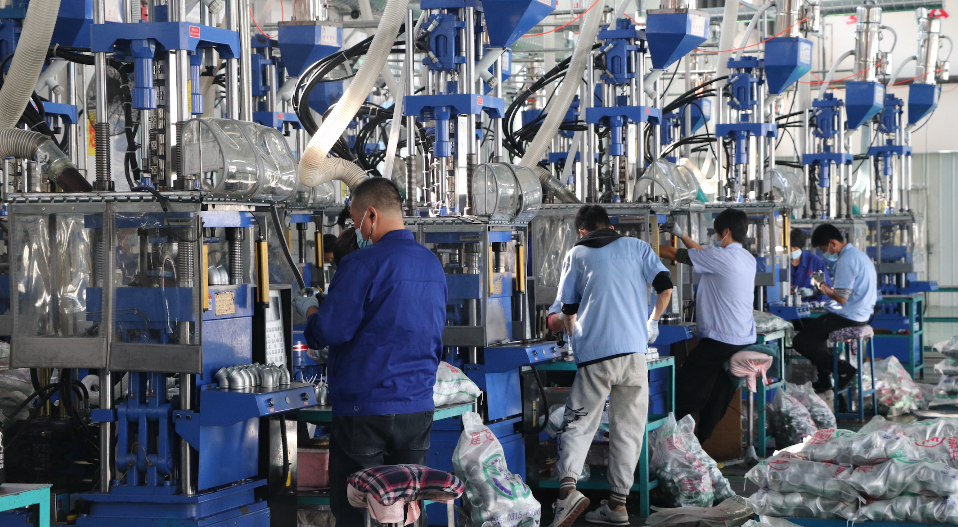
In 2026, the global perception of a China pipe fitting factory has undergone a radical shift. The narrative is no longer about mass-market volume at the lowest cost; it is about "Premium Tier" manufacturing defined by automation, precision, and high-performance standards. As the world’s leading hub for malleable iron pipe fittings, China has successfully pivoted toward a "quality-first" strategy that is essential for modern waterworks infrastructure.
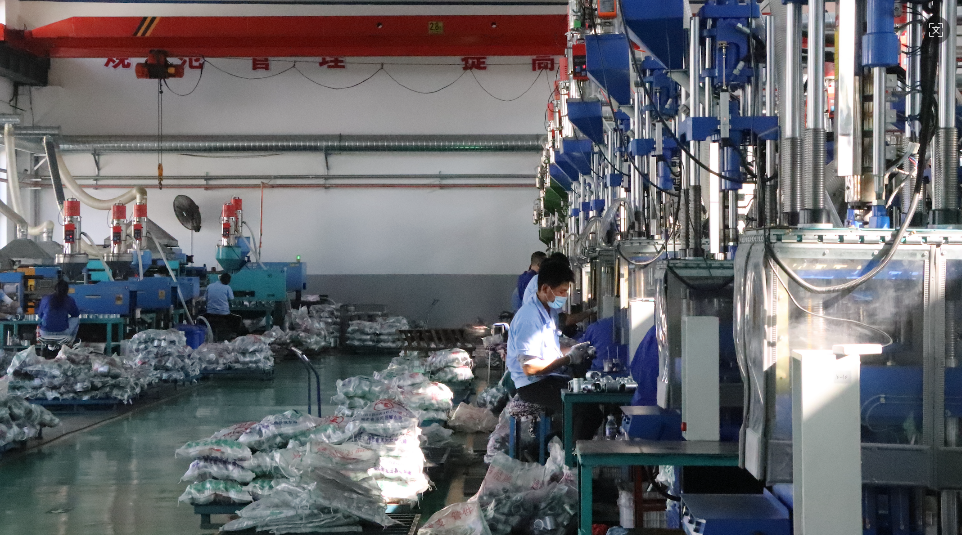
The most successful Chinese manufacturers in 2026 are those that have embraced the "Shao Er Jing" (Few but Fine) philosophy. Rather than maintaining sprawling, low-quality catalogs, elite factories focus on perfecting core product lines: malleable iron threaded pipe fittings and grooved ductile iron pipe fittings. By concentrating R&D and production resources, these facilities achieve a level of consistency that younger, less specialized competitors simply cannot match.
Experience is the ultimate validator in the casting industry. In 2026, buyers are prioritizing factories with deep roots, such as those founded in 1982 with 44 years of industry expertise. This longevity isn't just a number—it represents decades of refining metallurgical processes, mastering ASTM A153 galvanizing techniques, and building a workforce of over 4,000 employees. For a waterworks distributor, this history translates into "Zero-Defect" reliability, ensuring that every fitting can withstand the 2.5 MPa high-pressure demands of 2026 urban fire protection and water systems.
With factory footprints spanning over 400,000 square meters, China’s top-tier foundries have integrated AI-driven quality control and automated casting lines. This technological edge allows for the high-volume production of FM/UL certified fittings that maintain tighter tolerances than ever before. In the 2026 sourcing landscape, China remains the indispensable core of the supply chain—offering the unique combination of massive scale and "Premium Tier" precision that infrastructure projects require to stay on schedule and under budget.
In the 2026 global landscape, India has emerged as a formidable challenger in the galvanized pipe fittings market, primarily driven by its vast labor pool and favorable trade relations with Western economies. For waterworks distributors looking to diversify their supply chains under a "China + 1" strategy, India offers an attractive proposition for mid-tier, cost-sensitive projects. However, as we look closer at the technical requirements of 2026, a significant "Certification Gap" remains the primary hurdle for Indian manufacturers.
India’s strength lies in the production of high-volume, "commodity-grade" malleable iron fittings. Supported by government initiatives like the "Smart Cities Mission," domestic foundries have scaled up to meet massive internal demand for residential plumbing and basic irrigation. This has created a surplus of standard-duty fittings that are highly competitive on a price-per-unit basis. For a distributor managing low-pressure rural water projects, India provides a viable, low-tariff alternative.
The challenge arises when projects demand FM/UL certified or 2.5 MPa high-pressure ratings. In 2026, while many Indian foundries are upgrading their facilities, they often lack the 40+ years of metallurgical refinement found in elite Chinese factories. Achieving the consistent elongation rates and tensile strength required for high-stakes waterworks infrastructure is a long-term technical evolution. Consequently, many Indian-sourced fittings still face higher rejection rates during rigorous third-party pressure testing compared to the "Zero-Defect" output of a seasoned pipe fitting factory with decades of specialized experience.
Furthermore, the "Execution Gap" in India’s infrastructure remains a factor in 2026. While port capacities have improved, the inland logistical chain from foundries to major shipping hubs can still lead to unpredictable lead times. For a waterworks distributor operating on a tight project timeline, the 2-week "logistical buffer" often required for Indian shipments can offset the initial cost savings. In contrast, the established, high-speed supply chains of China’s 4,000-employee megaplants offer a level of predictability that is essential for 2026’s high-velocity construction market. While India is undoubtedly a rising star, it currently serves best as a secondary "satellite" source rather than the primary core for critical, certified infrastructure.
In the 2026 landscape of supply chain resilience, Turkey has solidified its position as the premier "near-shoring" hub for Europe and the Middle East. For a waterworks distributor operating in these regions, Turkey offers a compelling logistical advantage that Asian competitors often struggle to match: speed. In an era where 20-week lead times have become a common frustration, the ability of Turkish foundries to deliver malleable iron pipe fittings within 7 to 14 days by truck to Central Europe is a powerful selling point.
Turkey’s manufacturing sector has matured significantly by 2026. Its foundries are highly adept at producing galvanized pipe fittings that comply with European standards, such as the TSE (Turkish Standards Institute) and CE marks. This makes Turkey an ideal "Just-in-Time" (JIT) partner for urgent municipal repairs or small-to-mid-sized waterworks infrastructure projects.
However, this speed comes at a literal cost. The "Proximity Premium" in 2026 is real—Turkish-sourced fittings typically carry a 15% to 20% higher price tag than those from a high-efficiency pipe fitting factory in China. Higher energy costs in the Mediterranean region and rising labor wages mean that while Turkey is fast, it is rarely the most cost-effective choice for bulk procurement.
While Turkey excels at agility, it faces a structural challenge in 2026: scale. Most Turkish foundries are mid-sized operations that lack the massive production capacity of a facility with 4,000+ employees and 400,000 square meters of factory space. For global "megaprojects" requiring millions of FM/UL certified units or specialized 2.5 MPa high-pressure fittings, Turkish capacity can quickly become overextended, leading to sudden spikes in lead times that negate their primary advantage.
Furthermore, while Turkey is excellent for European EN-standard projects, their penetration into the North American ASTM A153 market remains limited compared to the 44-year legacy of top-tier Chinese exporters. For a distributor, the strategic move in 2026 is often to use Turkey as a "satellite" source for emergencies while maintaining a core partnership with a global leader.
Interestingly, the most sophisticated players in 2026 are bypassing this trade-off entirely. By partnering with a manufacturer that combines Chinese production scale with an EU-based production base (such as Romania), distributors can achieve Turkish-level transit speeds without the "proximity premium" or the capacity constraints of smaller foundries. In this way, the 44-year expertise of a 1982-founded powerhouse remains the gold standard for balancing speed, cost, and certified quality.
In 2026, the global trade of galvanized pipe fittings is no longer a smooth flow of goods; it is a complex navigation through what experts call "Regulatory Price Islands." For waterworks distributors, the landed cost of a fitting is now determined more by trade policy than by the price of iron. The year 2026 has seen a significant intensification of protectionist measures, creating a minefield for those relying solely on traditional export routes.
The most significant disruptor in early 2026 is the European Commission's decision (specifically Regulation 2026/709) to extend definitive anti-dumping duties on imports of threaded tube and pipe fittings made of malleable iron originating from China. These duties, which can exceed 50% in some cases, have effectively "walled off" the European market from standard Chinese exports. Similar pressures are mounting in the Americas, with Mexico and Argentina maintaining high-stakes trade barriers to protect local foundries. For a distributor, this means that sourcing directly from a Chinese factory often results in a final price that is no longer competitive for large-scale waterworks infrastructure projects.
Adding to the complexity is the full implementation of the Carbon Border Adjustment Mechanism (CBAM), which entered its definitive compliance phase on January 1, 2026. As of March 2026, every importer into the EU must be a registered "Authorized Declarant." The "Carbon Tax" on non-compliant steel and iron products is estimated to add between €150 and €550 per ton to the cost of imported fittings. For distributors, the administrative burden of tracking embedded emissions is as heavy as the financial cost, making "dirty" supply chains a major liability.
This is where strategic manufacturing provides a decisive advantage. By utilizing a production base in Romania, a manufacturer can offer a "Dual-Origin" advantage. Fittings produced in our Romanian facility are classified as EU-origin, meaning they are 100% exempt from anti-dumping duties targeting Chinese goods.
Furthermore, local EU production simplifies the CBAM compliance process for European distributors, eliminating the risk of border delays or surprise carbon surcharges. In 2026, the smartest procurement strategy isn't just about choosing between China, India, or Turkey—it’s about choosing a partner with the 44-year legacy of a Chinese powerhouse and the local agility of a Romanian factory. This "Glocal" approach ensures that your waterworks infrastructure remains shielded from the 2026 tariff minefield, providing the stability and price-certainty that only a multi-base manufacturer can offer.
In the late 2026 market, the primary bottleneck for waterworks distributors has shifted from physical production to "documentary compliance." As global safety standards for waterworks infrastructure reach a new peak of rigor, the industry is facing a Certification Choke Point. It is no longer enough to have a warehouse full of galvanized pipe fittings; every single component must now be backed by a transparent, verifiable data trail.
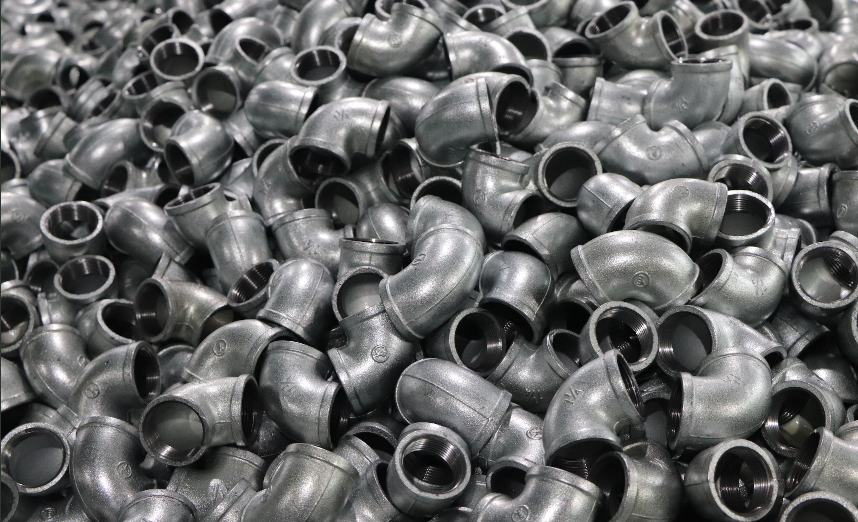
The year 2026 marks the global transition where 2.5 MPa (363 psi) high-pressure ratings have become the mandatory baseline for urban high-rise fire protection and municipal mainlines. This shift has effectively sidelined many generic manufacturers. Only elite foundries with 44 years of metallurgical expertise can consistently produce malleable iron fittings that pass these extreme pressure tests while maintaining the ductility required by FM/UL and TSE/CE standards. For a distributor, stock that lacks these specific high-pressure certifications is rapidly becoming "dead inventory" in the 2026 market.
A revolutionary change in 2026 is the demand for "item-level" traceability. Driven by government mandates for infrastructure resilience, major projects now require a Digital Twin for every critical joint. Leading Chinese and European foundries are now laser-etching unique QR codes onto each galvanized pipe fitting.
These codes link directly to a cloud-based "Birth Certificate," providing:
Material Heat Numbers: Real-time access to the specific batch of iron used.
Zinc Purity Logs: Verification that the ASTM A153 galvanizing process met 2026 environmental and thickness standards.
CBAM Data: Instant reporting of the embedded carbon footprint for EU import compliance.
In 2026, the cost of a "no-name" fitting failure has skyrocketed due to stricter insurance liability laws. Distributors are finding that the "Certification Premium" for a trusted, 44-year-old pipe fitting factory is actually the cheapest form of insurance. By prioritizing suppliers with a proven track record since 1982, distributors ensure that their grooved ductile iron pipe fittings and malleable iron stock are not just physical assets, but "digitally verified" components ready for the smartest infrastructure projects of 2026.
In the fragmented and highly regulated landscape of 2026, the final verdict for waterworks distributors is clear: the most successful procurement strategy is one that balances global scale with local agility. The choice between China, India, and Turkey is no longer a "zero-sum game," but a sophisticated exercise in risk management and supply chain resilience.
While India offers cost-effective commodity options and Turkey provides near-shoring speed for Europe, China remains the indispensable engine of the galvanized pipe fittings industry. However, the "winner" in 2026 is not just any factory—it is a manufacturer that has evolved into a global entity.
By choosing a partner with 44 years of expertise (founded in 1982) and a multi-national footprint, distributors gain the best of all worlds. You benefit from the massive R&D and high-volume output of a 4,000-employee Chinese operation, while simultaneously utilizing an EU-based production base (Romania) to bypass the "tariff minefield" of anti-dumping duties and CBAM surcharges. This dual-base strategy is the only way to ensure a steady supply of FM/UL certified fittings without falling victim to the 2026 "Price Island" phenomenon.
As you finalize your 2026 sourcing contracts, use this 44-year legacy checklist to audit your potential partners:
Capacity & Scale: Does the factory exceed 400,000 square meters to handle sudden surges in infrastructure demand?
High-Pressure Mastery: Can they guarantee 2.5 MPa (363 psi) performance for fire protection and municipal mainlines?
Regulatory Armor: Do they offer EU-origin stock to mitigate Anti-Dumping and CBAM risks?
Digital Integrity: Is every fitting laser-etched with a QR code for Digital Twin traceability?
In 2026, the most expensive fitting is the one that doesn't arrive or fails the inspection. As the global leader in malleable iron pipe fittings and grooved ductile iron fittings, our group continues to define the industry standard. With 44 years of history and three global production bases, we provide more than just a component; we provide the certainty that your waterworks infrastructure projects will be built on time, under budget, and beyond compliance.
The 2026 market belongs to those who prioritize "Certified Resilience." Choose a partner that has been building that resilience since 1982.
SAFER
PRODUCT INFO
ABOUT JIANZHI
TECH DATA
Contact Us
E-mail: sales1@jianzhi-fitting.com
Tel: +86 15822792427
Office In Tianjin:
Heping District, Tianjin, China.
Production Base 1:
Chifeng, Inner Mongolia, China.
Production Base 2:
Tangshan City, Hebei Province, China.
Production Base 3:
Schelei Street,Baicoi City,Prahova County,Romania