Jun. 05, 2026
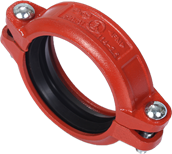
In the evolving landscape of 2026 waterworks infrastructure, the grooved pipe fitting has transitioned from a specialized component to a global industry standard. Central to this revolution is the flexible coupling, a masterpiece of mechanical engineering designed to provide more than just a leak-proof seal. Unlike its rigid counterpart, a flexible grooved coupling allows for controlled linear movement and angular deflection, making it an indispensable asset for modern, high-resilience piping networks.
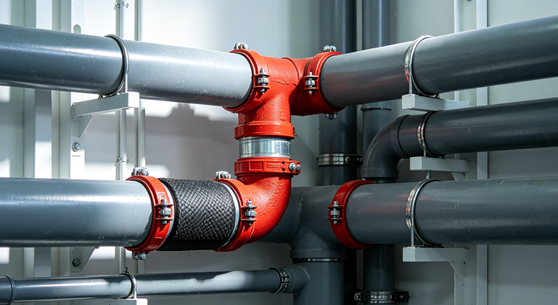
A flexible grooved coupling is engineered with a slightly wider key section than the pipe groove, allowing the joint to stay secure while permitting the pipe ends to move within the housing. This "designed-in" tolerance allows the system to absorb thermal expansion, contraction, and even seismic shifts without compromising the integrity of the line. For any waterworks distributor sourcing in 2026, understanding this distinction is critical: while rigid couplings provide structural alignment, flexible couplings provide the "give" that prevents catastrophic pipe fatigue.
Drawing on a 44-year legacy of metallurgical excellence, high-tier manufacturers have refined the production of ductile iron flexible couplings to meet the rigorous 2.5 MPa (363 psi) standards required for today’s high-rise and industrial applications. These fittings are not merely cast; they are precision-engineered to provide "Zero-Leak" performance under extreme pressure.
In 2026, the complexity of global trade—including anti-dumping duties and CBAM compliance—means that where you source your grooved pipe fitting is just as important as the spec itself. By utilizing a triple-base production strategy (spanning China and Romania), a factory with 4,000+ employees can ensure that these critical flexible components are delivered with the necessary FM/UL certifications, regardless of regional trade barriers. As we explore the following seven applications, it becomes clear that the "flexibility" of these couplings is the backbone of the world's most durable piping systems.
In the realm of high-rise fire protection systems, the grooved pipe fitting is the gold standard for reliability. As urban landscapes reach new heights in 2026, the vertical piping—or "risers"—must handle massive hydraulic forces. This is where the flexible coupling plays its most critical role: acting as a mechanical shock absorber against the "water hammer" effect.
A water hammer occurs when a fire pump kicks in or a valve closes abruptly, sending a high-velocity pressure wave through the system. In a rigid system, this energy can crack joints or pull hangers from the ceiling. However, a ductile iron flexible coupling allows for slight axial movement and deflection, dissipating the surge energy before it can damage the waterworks infrastructure. For any waterworks distributor, supplying a product that can withstand these repetitive stresses is essential for long-term building safety.
In 2026, building codes have moved strictly toward 2.5 MPa (363 psi) standards for fire safety in skyscrapers. Our FM/UL certified grooved couplings are engineered to exceed these high-pressure requirements. The certification isn't just a label; it’s a guarantee that the grooved pipe fitting has passed rigorous "hydrostatic strength" and "vibration" tests. This compliance is a non-negotiable requirement for contractors and insurance providers who manage multi-million dollar residential and commercial developments.
Manufacturing a coupling that remains flexible under 2.5 MPa pressure requires sophisticated metallurgy. With 44 years of experience (established in 1982), our factory has perfected the casting of high-grade ductile iron to ensure the housing doesn't become brittle over time. By combining this technical mastery with a dual-base production strategy (China and Romania), we ensure that fire protection projects across the globe receive the highest quality flexible couplings without the delays or tax burdens of traditional supply chains. In the life-safety industry, the "flex" in our coupling is the difference between system failure and successful fire suppression.
In the expansive world of municipal waterworks infrastructure, pipelines often stretch across vast outdoor terrains or are buried in shifting soils. These systems are constantly subject to thermal expansion and contraction caused by seasonal temperature fluctuations. A rigid piping system would quickly succumb to these physical stresses, leading to cracked joints or significant leakage. The flexible coupling within a grooved pipe fitting system provides the essential "breathing room" required to keep these networks operational.
By allowing for controlled axial movement and angular deflection, the flexible coupling acts as a built-in expansion joint. This eliminates the need for expensive, specialized expansion loops, significantly reducing the overall footprint and cost of the waterworks infrastructure. Furthermore, our couplings are cast from high-grade ductile iron and treated with ASTM A153 hot-dip galvanizing to ensure decades of corrosion resistance in harsh underground environments.
Leveraging 44 years of experience (since 1982), our manufacturing process ensures that every grooved pipe fitting maintains its structural integrity even under the shifting pressures of municipal supply. With production bases in China and Romania, we provide water authorities worldwide with a reliable, duty-exempt supply of high-performance couplings that turn thermal challenges into managed mechanical movements.
In modern commercial building design, the mechanical room is often the "noisy heart" of the structure. Chiller units, massive pumps, and air handling units generate significant vibration and acoustic noise. Without the right grooved pipe fitting strategy, these vibrations travel through rigid steel pipes, turning the entire building’s waterworks infrastructure into a giant tuning fork. This is where the flexible coupling becomes a critical tool for acoustic engineers.
A flexible coupling acts as a natural "acoustic break." Because the design allows for a small gap between the pipe ends and utilizes a resilient elastomeric gasket, it effectively interrupts the metal-to-metal path that noise follows. By installing three consecutive flexible joints near vibration sources, contractors can dampen up to 90% of transmitted noise. For premium office spaces and luxury hotels, using high-quality ductile iron flexible joints is the most cost-effective way to ensure tenant comfort without the need for expensive specialized dampeners.
HVAC systems in 2026 skyscrapers often operate under significant load, requiring components that meet 2.5 MPa (363 psi) standards. Our FM/UL certified grooved fittings provide the necessary strength to handle chilled water loops and high-pressure steam while maintaining their dampening properties. Furthermore, the compact nature of the grooved system allows for 3x faster installation in cramped mechanical rooms compared to traditional welding or flanging.
Producing a coupling that can provide long-term vibration isolation without leaking requires metallurgical precision. With 44 years of experience (since 1982), our factory has mastered the production of ductile iron housings that maintain their shape and "flex" over millions of vibration cycles. By leveraging our dual-base production strategy in China and Romania, we ensure that HVAC contractors worldwide have immediate access to the certified flexible couplings needed to keep their systems silent and their projects on schedule.
Mining operations and wastewater treatment plants (WWTP) present some of the most challenging environments for waterworks infrastructure. In these sectors, the grooved pipe fitting system is preferred not just for its installation speed, but for its unparalleled mechanical resilience in the face of shifting ground and corrosive fluids.
In mining, pipelines often stretch across several kilometers of uneven, rocky terrain. Unlike rigid connections that require precise alignment, a flexible coupling allows for significant angular deflection. This allows the pipeline to "snake" across the landscape and adapt to the natural contours of the earth. Furthermore, in wastewater facilities where heavy tanks and processing equipment may settle into the soil over time, the "flex" in the grooved pipe fitting prevents the system from snapping or leaking under the resulting structural stress.
Whether it’s abrasive mining slurry or chemical-laden wastewater, the components must be built to last. Our flexible couplings are cast from high-strength ductile iron and are engineered to meet 2.5 MPa standards, ensuring they can handle the high-pressure surges typical of industrial pumping stations. To combat corrosion, we offer specialized technical coatings and ASTM A153 hot-dip galvanizing, providing a protective barrier that significantly extends the lifespan of the waterworks infrastructure.
In the mining industry, downtime is measured in thousands of dollars per hour. The "break-and-replace" design of a flexible coupling allows for rapid maintenance without the need for specialized welding equipment in remote areas. Backed by 44 years of experience (since 1982), our factory produces FM/UL certified fittings that global mining and environmental firms trust for their most critical lines. By leveraging our dual-base production strategy in China and Romania, we ensure that these high-performance components are delivered to project sites worldwide, bypassing trade barriers and meeting 2026’s rigorous supply chain demands.
In the maritime industry, the piping network is the "circulatory system" of the vessel, and it must operate under conditions that would destroy a standard terrestrial system. On the open sea, a ship’s hull is constantly twisting, bending, and hogging due to wave action. A rigid piping system would quickly succumb to these stresses, leading to catastrophic leaks in ballast, fuel, or fire suppression lines. This makes the flexible coupling the most critical grooved pipe fitting for modern shipbuilding and offshore engineering.
A flexible coupling is specifically engineered to handle the dynamic movement of the hull. By allowing for both axial displacement and angular deflection, these joints absorb the mechanical strain caused by the ship’s natural flex. In the 2026 maritime sector, where vessels are becoming larger and more complex, the ability of a ductile iron coupling to maintain a "Zero-Leak" seal while the pipes are literally shifting is essential for operational safety and environmental protection.
Space is at a premium in engine rooms and pump galleries. The compact profile of a grooved pipe fitting allows for much tighter packing than bulky flanges or welded joints. Furthermore, maritime fire systems now demand compliance with 2.5 MPa (363 psi) standards to ensure they can operate during emergency scenarios. Our FM/UL certified and CE-marked couplings provide the high-pressure resilience required by international maritime registries.
With 44 years of experience (since 1982) and a workforce of over 4,000 employees, our factory has perfected the casting of corrosion-resistant, high-strength ductile iron for the marine market. Whether it is a luxury liner or a container ship, our dual-base production strategy (China and Romania) ensures that shipyards worldwide can source duty-exempt, high-performance couplings. In an industry where "vessel-down" time is incredibly costly, trusting a manufacturer with nearly half a century of expertise is the ultimate insurance for waterworks infrastructure at sea.
In 2026, seismic resilience has become a top priority for waterworks infrastructure in earthquake-prone regions like California, Japan, and the Mediterranean. When the earth shifts, rigid piping systems are the first to fail, often snapping at the joints and causing devastating secondary damage through flooding or fire system failure. The flexible coupling is the primary defense mechanism in these scenarios, specifically designed to absorb the sudden, violent movements of a seismic event.
The unique engineering of a flexible grooved pipe fitting allows it to act as a mechanical buffer. Because the coupling allows for significant angular deflection and axial movement, it provides the piping network with the "flex" needed to follow the ground's displacement without rupturing. In high-risk zones, using a sequence of ductile iron flexible couplings at seismic joints ensures that the fire protection systems remain pressurized and functional when they are needed most.
Our couplings are tested to meet the world’s most stringent 2.5 MPa (363 psi) standards, ensuring they don't burst under the intense pressure spikes that can occur during a quake. With 44 years of expertise (since 1982), we have refined our metallurgical process to ensure our FM/UL certified fittings provide maximum ductility. Furthermore, our Romania production base allows us to rapidly supply seismic-certified grooved pipe fittings to active zones across Europe and the Middle East, bypassing traditional trade barriers and ensuring that critical infrastructure is built to survive the unthinkable.
In the high-intensity environment of industrial pump and compressor stations, equipment longevity depends on the stability of the connected piping. Heavy machinery naturally generates high-frequency vibrations and minor misalignments that can transmit back into the system, leading to bearing failure or cracked welds. Integrating a flexible coupling into the grooved pipe fitting layout is the industry’s preferred method for isolating these mechanical stresses at the source.
A flexible grooved pipe fitting acts as a vibration isolator, preventing the rhythmic pulses of a 2026-spec industrial pump from traveling through the entire waterworks infrastructure. By allowing for subtle axial and angular adjustments, the flexible coupling compensates for the thermal growth and slight mounting inaccuracies that are common in heavy-duty mechanical rooms. This "mechanical cushion" significantly extends the Mean Time Between Failures (MTBF) for expensive compressors and pumping units.
Operating under 2.5 MPa standards, these stations require fittings that won't fatigue under constant cyclic loading. Leveraging 44 years of experience (since 1982), our factory produces FM/UL certified ductile iron couplings specifically designed for these high-stress zones. Our dual-base production strategy in China and Romania ensures that industrial contractors can secure a reliable, duty-compliant supply of grooved pipe fittings that protect both the pipeline and the machinery it serves. In 2026, the "flex" in our joint is synonymous with industrial durability.
SAFER
PRODUCT INFO
ABOUT JIANZHI
TECH DATA
Contact Us
E-mail: sales1@jianzhi-fitting.com
Tel: +86 15822792427
Office In Tianjin:
Heping District, Tianjin, China.
Production Base 1:
Chifeng, Inner Mongolia, China.
Production Base 2:
Tangshan City, Hebei Province, China.
Production Base 3:
Schelei Street,Baicoi City,Prahova County,Romania