Apr. 23, 2026
Flexible couplings play a critical role in modern fire protection systems. Unlike rigid connections, they allow controlled movement within piping networks, preventing stress buildup and system failure.
Flexible couplings allow movement while maintaining a secure seal
They absorb vibration, thermal expansion, and misalignment
Essential for system durability and safety
Work differently from rigid couplings
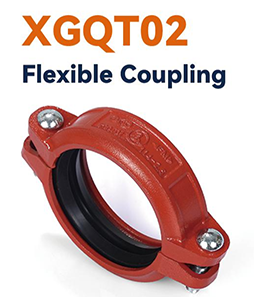
A flexible coupling consists of:
Rubber gasket (EPDM)
Bolts and nuts
The design allows a small gap between pipe ends, enabling movement while maintaining a tight seal.
Allows pipes to expand and contract due to temperature changes.
Enables slight misalignment between pipes.
Reduces mechanical stress from pumps and flow turbulence.
| Feature | Flexible | Rigid |
|---|---|---|
| Movement | Yes | No |
| Vibration absorption | High | None |
| Structural support | Low | High |
| Use case | Dynamic areas | Stable sections |
Typical ranges include:
Axial movement: a few millimeters
Angular deflection: 1–3 degrees
(Exact values depend on manufacturer specifications)
Without flexibility:
Systems fail during emergencies
Flexible couplings ensure:
System resilience
Continuous water supply
Long-term durability
See full selection guide:Flexible Coupling Selection Guide
Flexible couplings are engineered to absorb movement and protect piping systems. Understanding how they work helps engineers design safer, more reliable fire protection systems.
Looking for high-performance flexible couplings?Contact JIANZHI for UL/FM certified solutions.
SAFER
PRODUCT INFO
ABOUT JIANZHI
TECH DATA
Contact Us
E-mail: sales1@jianzhi-fitting.com
Tel: +86 15822792427
Office In Tianjin:
Heping District, Tianjin, China.
Production Base 1:
Chifeng, Inner Mongolia, China.
Production Base 2:
Tangshan City, Hebei Province, China.
Production Base 3:
Schelei Street,Baicoi City,Prahova County,Romania